
The most defensible estimated net worth range for Vittorio Emanuele, Prince of Naples sits somewhere between $40 million and $60 million based on aggregated public reporting, but that number carries significant uncertainty. No audited financials, disclosed will, or verified asset registry for him has surfaced in public records. The figure you'll see on most net worth sites is essentially a triangulated guess built from family wealth context, a publicly known €260 million restitution claim against the Italian state, and his wife's family business background. That's worth knowing before you treat any single number as authoritative.
Vittorio Emanuele Prince of Naples Net Worth: Estimate & How to Verify

Marcus Rothwell
7 Jul 2026
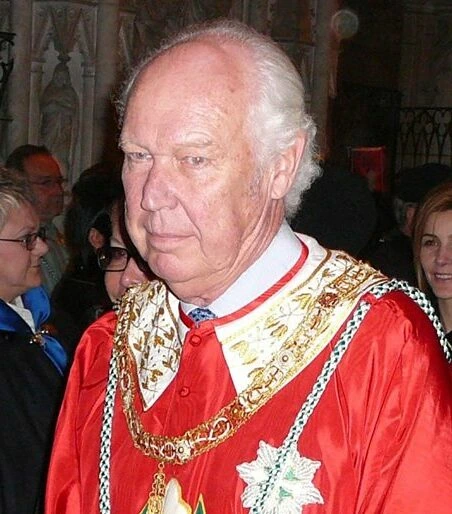
Who exactly is Vittorio Emanuele, Prince of Naples?

Vittorio Emanuele (born 12 February 1937, died 3 February 2024) was the son of Umberto II, the last reigning King of Italy, and Queen Marie-José of Belgium. When Italy abolished its monarchy by referendum in 1946, the Savoy family went into exile and all male Savoy heirs were barred from Italian territory. Vittorio Emanuele grew up outside Italy and spent decades asserting a claim to what he called the Italian throne, styling himself 'King of Italy' in some contexts.
The title 'Prince of Naples' is the key identity marker here, and it's worth unpacking. Historically, Italian monarchs used 'Prince of Naples' as an heir apparent courtesy title alongside 'Prince of Piedmont.' Victor Emmanuel III, for example, bore the title Prince of Naples during his father's lifetime. For Vittorio Emanuele, this title was an informal, non-legally-recognized designation tied entirely to the House of Savoy's heir tradition, not a title recognized by the modern Italian state. ABC News described him as 'the so-called prince of Naples,' which captures the contested framing accurately. Wikimedia Commons categorized him as 'disputed head of the House of Savoy' from 1983 to 2024.
There's also an important disambiguation issue: the Savoy claimant line split after Umberto II's death in 1983 into two competing branches. Vittorio Emanuele claimed headship of the house, while a rival claimant, Prince Amedeo, used the title Duke of Savoy. That internal dispute is relevant because it muddies both the symbolic authority and any wealth-related claims attached to the headship. When you're searching around Savoy family finances, you need to know which branch and which individual you're looking at.
Why getting a firm number is genuinely difficult
Royal claimants occupy a strange financial middle ground. They're not monarchs receiving state allowances, not elected officials filing public disclosures, and not corporate executives with SEC filings or equivalent. Vittorio Emanuele lived primarily in Geneva and Monaco for much of his adult life. His assets were held across multiple jurisdictions, and because he was a private individual (legally speaking, regardless of his royal claims), he had no public obligation to disclose income, holdings, or liabilities.
The 1946 transition regime stripped male Savoy heirs of property and barred their return to Italy. That confiscation is central to understanding why the estate picture is so opaque: large chunks of what would have been Savoy dynastic wealth in Italy were seized by the Italian state. The family spent decades litigating or lobbying for restitution. What remained in private hands, what was legally transferred to family members before exile, and what was accumulated afterward through private investment are all essentially unknown outside the family's own records.
What wealth components are plausibly in the picture

Even without verified financials, you can reason about the likely categories of wealth for someone with Vittorio Emanuele's background. These aren't confirmed line items; they're the logical places to look.
- Inherited Savoy assets: Whatever private property and liquid assets Umberto II held at the time of his death in 1983 would have passed to Vittorio Emanuele. Umberto II himself lived in exile in Cascais, Portugal, and maintained a lifestyle consistent with significant private wealth, though the scale of his estate was never publicly documented.
- Restitution claims and legal disputes: In late 2007, Vittorio Emanuele and his son Emanuele Filiberto formally requested €260 million in financial damages from the Italian government, plus interest, citing their exile and the confiscation of properties. The properties cited in reporting included the Quirinale palace and Villa Ada in Rome. Whether any settlement or partial restitution followed is not clearly documented in public sources.
- Marina Ricolfi-Doria's family wealth: His wife Marina came from a family connected to the founding of the Doria biscuit and confectionery business in Italy. Her father René Ricolfi Doria was linked to that business lineage. This implies the Vittorio Emanuele household had access to wealth that originated outside the Savoy dynastic legacy entirely, though no figure for her inheritance or personal assets has been publicly reported.
- Private investments and corporate holdings: Separately from the dynastic question, later Savoy-line family members have been associated with corporate structures. An Italian company called Casa Reale Holding S.p.A. is publicly registered in Italian corporate records, which at minimum illustrates that some family-connected wealth is organized through business vehicles. Whether Vittorio Emanuele personally held stakes in such entities is not clear from public sources.
- Lifestyle and Monaco/Geneva residency: Living in Monaco and Geneva for decades implies meaningful private wealth to sustain that lifestyle, but this is contextual inference, not a documented asset.
How this site builds an estimate and what the uncertainty range means
Net worth, in the standard definition, is total assets minus total liabilities. For a public figure with disclosed financials, that's a tractable calculation. For a private royal claimant who lived across multiple jurisdictions and died in early 2024, it's a research exercise in triangulation with significant gaps. The methodology here works in layers.
- Anchor on documented public figures: The €260 million restitution request is a concrete, publicly reported number. It represents what the family itself said their losses and damages were worth. It's not the same as net worth, but it's a real data point with a paper trail.
- Cross-reference family wealth signals: Umberto II's exile lifestyle, Marina Doria's family business background, and the existence of corporate holding structures associated with the family line all point toward multi-generational wealth in the tens of millions of dollars range, not hundreds of millions.
- Evaluate what competing sources actually report: Sites like TrendingCelebs cite 'around $50 million,' while a blog-style page claims $40 million. Neither identifies primary documents. The son Emanuele Filiberto is separately estimated at $100 million by CelebrityNetWorth, a figure that sometimes gets misattributed to the father. Stripping out that confusion, the father's range in secondary reporting clusters around $40–60 million.
- Apply an uncertainty marker: Because no primary financial disclosure exists, the confidence level on this estimate is low-to-moderate. The range is wide enough to be honest about what we don't know. A high-confidence net worth estimate requires at least one verifiable anchor (a will filing, a property transaction record, a corporate ownership disclosure). None has been identified here.
- Note currency and inflation adjustments: The €260 million claim was made in 2007. In mid-2026 terms, that figure would be meaningfully larger in nominal euros. Any historical Savoy dynastic wealth figures from pre-1946 sources are not useful for modern net worth estimation without full inflation adjustment and accounting for what was actually retained versus confiscated.
Comparing the numbers you'll find online

Here's the honest breakdown of the figures circulating online and how seriously to take each one.
| Source Type | Figure Cited | Credibility Assessment |
|---|---|---|
| Blog/non-attributed net worth page | $40 million | Low: no primary documents cited, likely a round-number estimate based on family background context |
| TrendingCelebs and similar aggregators | ~$50 million | Low-to-moderate: aggregates other estimates rather than original research; no sourcing to primary records |
| CelebrityNetWorth (for Emanuele Filiberto, son) | $100 million | Moderate for the son specifically; frequently misattributed to the father due to shared naming conventions |
| Italian state restitution claim (2007) | €260 million (damages requested) | High as a documented public event; but represents claimed losses/damages, not confirmed personal net worth |
| Italian corporate registry (Casa Reale Holding) | Business entity confirmed | Verifiable via public Italian company records; asset value not publicly disclosed |
The biggest trap here is the Emanuele Filiberto confusion. Because the son has a higher public profile (television appearances in Italy, published media presence) and has his own net worth page with a $100 million figure, some searches and summary pages blend the two. Always check whether the number you're looking at explicitly names the father, Vittorio Emanuele, born 1937, died 2024, and not his son. The two are separate individuals with separate estimated wealth profiles. The son's profile is more documented; the father's is almost entirely inferred.
It's also worth noting that CelebrityNetWorth's methodology, which is the most widely cited source for celebrity and royalty wealth estimates, uses a proprietary formula that the New York Times has questioned in terms of its technical rigor. The site describes incorporating salaries, real estate records, divorce filings, royalties, and lawsuits, then subtracting estimated taxes and lifestyle expenses. For a figure like Vittorio Emanuele, where none of those standard data inputs are publicly available, any CelebrityNetWorth-style estimate would be built almost entirely on assumptions rather than observable data.
Practical steps to verify or update this estimate
If you want to do original research or check whether newer information has emerged since this article was published, here's where to actually look.
- Search Italian probate and estate records: Vittorio Emanuele died in February 2024. Italian succession proceedings, if any assets were held in Italy or if Italian courts had jurisdiction over part of his estate, may generate public or semi-public filings over the next several years. Monaco and Swiss probate records are much harder to access but worth monitoring.
- Check the outcome of the 2007 restitution claim: The €260 million damages request made to Italian leadership in 2007 had a documented paper trail (reporting tied it to a Rai 3 Ballarò program and an open letter). Track whether any settlement, court ruling, or legislative resolution followed. This is the single most concrete financial event in his public record.
- Search Italian corporate registries: Italian companies can be looked up via public registry tools. Casa Reale Holding S.p.A. is one example. Searching for Savoy-related holding entities or checking whether Vittorio Emanuele or Marina Doria appear as officers or shareholders in Italian corporate filings could surface asset connections.
- Disambiguate before reading any source: Before accepting a net worth number, confirm the source explicitly identifies the subject as Vittorio Emanuele, born 12 February 1937, son of Umberto II, died 3 February 2024. Reject any figure that might be blending him with his son Emanuele Filiberto or with other Savoy-line figures.
- Check for journalistic estate reporting: Major Italian newspapers (Corriere della Sera, La Repubblica) and international outlets that covered the 2007 restitution story may publish follow-up reporting on the estate following his 2024 death. Google News searches in Italian will surface material that English-language net worth sites typically miss.
- Use the Doria family business angle as a separate research thread: If you want to understand the household wealth more completely, researching the Doria confectionery company's history and any publicly known inheritance or equity held by Marina Ricolfi-Doria is a legitimate separate research path. It won't produce a number easily, but it provides context for the household's financial base beyond the Savoy dynastic story.
The honest bottom line on Vittorio Emanuele's net worth

The $40–60 million range represents the most reasonable estimate given publicly available information, but it should be treated as a low-confidence approximation rather than a researched figure. For readers specifically tracking Joseph Vittoria net worth estimates, the same caveats about missing audited records and heavy reliance on inference apply. The blank" rel="noopener noreferrer">€260 million restitution claim tells you the family believed their losses were enormous, but it doesn't tell you what they actually held in private assets. The Doria family connection suggests meaningful non-Savoy wealth in the household. The Monaco and Geneva residency pattern is consistent with someone in this wealth range, not someone in the hundreds-of-millions tier.
The most important thing to walk away with: almost every net worth figure you'll find for Vittorio Emanuele online is a secondary estimate built on other estimates, not on primary financial disclosure. If you are comparing sources for Vittorio Assaf net worth, keep in mind that similar identity and data-quality issues often affect what gets published online Vittorio Emanuele. That's not unusual for royals and claimants, but it does mean the numbers deserve skepticism. Treat the range as a starting point for your own research, not a settled answer. His 2024 death may eventually generate estate proceedings that produce more grounded data. Until then, the honest answer is: probably in the range of $40–60 million, with meaningful probability the true figure is higher given the family's historical wealth and litigation posture, and meaningful probability it's lower given the confiscations and exile.
For related context on other figures in this family and name cluster, separate profiles on Vittorio Emanuele of Savoy and on his son Emanuele Filiberto provide additional financial framing. It's also worth noting that searches for 'Vittorio Emanuele net worth' without the 'Prince of Naples' qualifier sometimes surface entirely different individuals, so the identity check at the start of your research is not optional.
FAQ
How can I tell whether a “Vittorio Emanuele prince of Naples” net worth number is actually about the father or the son?
Look for primary identifiers, not just the name. Confirm the person’s birth date (12 Feb 1937), death date (3 Feb 2024), and that the query matches Vittorio Emanuele of the House of Savoy, not his son Emanuele Filiberto. Net worth pages often mix up father and son, especially when one has more media coverage.
What evidence would most credibly confirm or refute a net worth estimate after his death?
Because no audited disclosure is expected, the best verification angle is to search for estate-related documents, court filings, or probate proceedings in jurisdictions where his assets were reportedly held (commonly Switzerland and Monaco). If those records appear, you can translate disclosed asset categories into a net figure, but until then, most estimates remain inference-based.
Does the €260 million restitution claim tell me what his net worth really was?
Treat restitution references as loss context, not asset value. A restitution claim amount reflects what the family sought from the Italian state, it does not automatically equal what they recovered, and it does not equal the net worth at death. The recovered portion, any legal deductions, and the reinvestment strategy afterward would all change the eventual wealth picture.
Why does the internal dispute over Savoy headship matter for net worth reporting?
When online lists provide multiple “Savoy head” roles, the wealth attribution can shift depending on which claimant and which branch is being discussed. If you are comparing sources, note the exact wording used (head of House, disputed claimant, or a specific titled branch) because some pages assign family wealth to the “head” as a symbol even though legal ownership may be held differently.
How can I evaluate whether a net worth website is using real data versus copying other estimates?
A lot of estimates are “stacked” from other estimates. To reduce error, compare how each source explains its inputs, then down-rank any page that cites no document types (real estate records, court filings, probate, or verified ownership). If the explanation is mostly generic “family wealth” language, it is likely not doing independent work.
What common asset-category mistakes can make royalty net worth estimates misleading?
Watch for category errors. Some pages report “net worth” as if it were liquid cash, but for royals it can be concentrated in trusts, private companies, artwork, or real estate held in different jurisdictions, which may not surface in public registries. A lower “cash” assumption does not automatically mean lower total assets.
What’s a practical way to estimate a net worth range when there is no public financial disclosure?
If you want a more defensible range than a single number, use scenario bands instead of point estimates. For example, model three cases (higher/lower) based on how much of historical wealth remained protected after exile and confiscation, then adjust for private investment performance and settlement outcomes. The goal is a wider confidence interval, not a false precision figure.
Will his 2024 death likely cause net worth numbers to update, and how should I treat those updates?
Yes, but only if you confirm you’re analyzing the same legal person and same time window. After a death in early 2024, some sites may update “net worth” values without referencing probate outcomes. Those updates can reflect hearsay or a re-run of their old assumptions, so you should look for any mention of estate documents or filing dates.