
No credible, audited net worth figure exists for Vittorio Emanuele of Savoy (Vittorio Emanuele, Prince of Naples, 1937–2024). The numbers that circulate online, typically somewhere between $40 million and $170 million depending on the site, are either unverified aggregator guesses or figures drawn from a 2007 legal compensation claim that was never independently valued. That does not mean his wealth was unknowable, but it does mean any single number you see deserves serious skepticism. Here is what the evidence actually shows, how to weigh it, and what you can reasonably conclude today.
Vittorio Emanuele of Savoy Net Worth: Best Estimates

Marcus Rothwell
9 Jun 2026
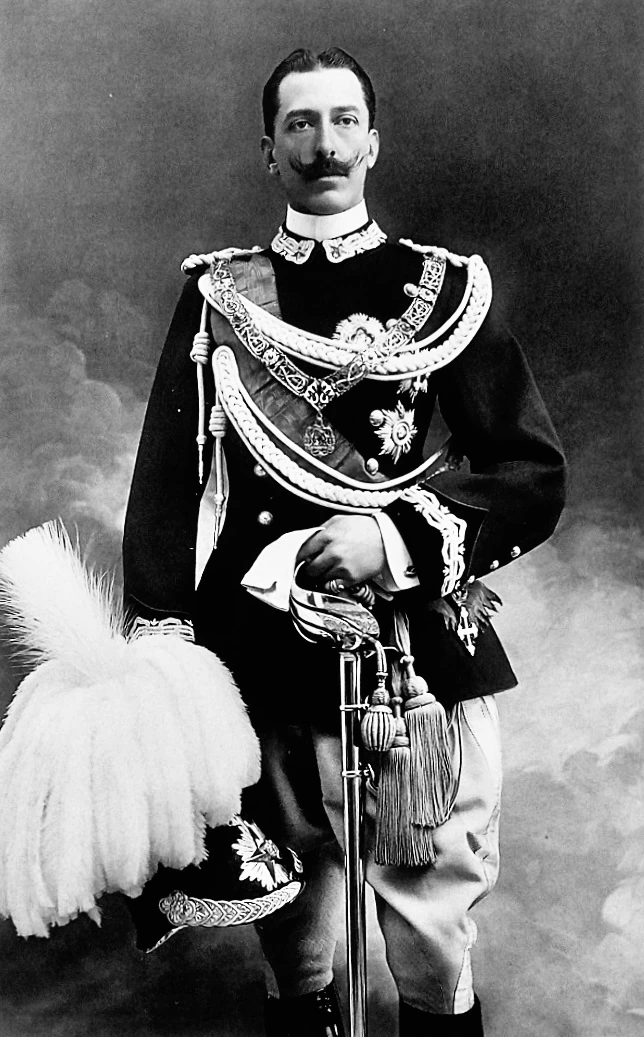
Who Vittorio Emanuele of Savoy actually is (and who he is not)

The person most searches are looking for is Vittorio Emanuele Alberto Carlo Teodoro Umberto Bonifacio Amedeo Damiano Bernardino Gennaro Maria di Savoia, born 12 February 1937 and died 3 February 2024 at age 86. He was the son of Umberto II, Italy's last king, and Princess Marie-José of Belgium. After the June 1946 referendum abolished the Italian monarchy, the family went into exile and Vittorio Emanuele spent most of his adult life in Switzerland. He held the dynastic title Prince of Naples and was considered the head of the House of Savoy by legitimist supporters, though the Italian Republic never recognized that role officially.
The disambiguation matters here because at least two other prominent figures share the Vittorio Emanuele name within the same dynasty. Prince Vittorio Emanuele, Count of Turin (24 November 1870 – 10 October 1946) was a distinct historical person from an earlier generation. Additionally, Emanuele Filiberto of Savoy, Prince of Venice, is Vittorio Emanuele's son and heir, and some aggregator net worth pages conflate the two or substitute one for the other. [CelebrityNetWorth, for instance, lists Emanuele Filiberto at $100 million](https://www.
celebritynetworth. com/richest-politicians/royals/emanuele-filiberto-net-worth/), a figure that should not be applied to his father. If you are researching a different member of the family, the net worth profiles for Vittorio Emanuele (Prince of Naples) and Vittorio Emanuele Prince of Naples are the same person, while searches involving related figures like Vittorio Assaf or Joseph Vittoria refer to entirely different individuals. Some net worth pages that mention Joseph Vittoria refer to an entirely different individual, so be careful when comparing figures.
When you see claims about Vittorio Assaf net worth, they are often referring to a different person than Vittorio Emanuele of Savoy.
What 'net worth' even means for a dynastic figure
Net worth, in its straightforward definition, is total assets minus total liabilities: what you own minus what you owe. For a tech founder or celebrity, that calculation is relatively transparent because stock holdings, disclosed salaries, and company valuations create an evidence trail. For a dynastic figure like Vittorio Emanuele, the picture is fundamentally different. He held no publicly traded shares tied to his name. His potential assets were largely inherited property, movable assets like artworks or jewels, and whatever private financial holdings he accumulated during his decades in exile. None of those are subject to the kind of mandatory disclosure that drives the Forbes 400 or Bloomberg Billionaires Index calculations.
There is also a structural legal wrinkle unique to his situation. Italy's constitutional transitional provisions, specifically the XIII Disposizione Transitoria e Finale, state that assets in Italy belonging to former House of Savoy kings and their male descendants were 'avocati allo Stato,' meaning appropriated to the Italian State. This means a portion of what might have been Savoy family property in Italy was legally transferred away after 1946, and subsequent restitution disputes have never been fully resolved. Any honest net worth estimate has to account for that contested baseline.
The best available net worth estimates and where they come from

The most substantive public figure attached to Vittorio Emanuele's wealth is not a net worth estimate at all. It is a 2007 legal compensation claim. Italian media (covered by The Irish Times and several Italian outlets at the time) reported that the Savoy family filed for approximately €260 million in total damages: €170 million sought by Vittorio Emanuele himself for confiscated properties and years of forced exile, and €90 million sought by his son Emanuele Filiberto.
That €170 million figure is the closest thing to a headline wealth number that comes from a named, dated, primary claim. But as contemporary reporting noted, the monetary value of the confiscated property was 'not immediately known,' meaning the €170 million was a legal ask, not an audited valuation.
Beyond that, aggregator sites produce widely varying numbers. One site places his net worth at approximately $40 million, without citing an asset breakdown or methodology. No major financial publisher, including Forbes or Bloomberg, has published a verified net worth profile for Vittorio Emanuele. The only way to interpret the existing landscape honestly is: the $40 million figure is likely a low-end guess, the €170 million compensation claim is a legal ceiling that was never independently verified, and the true figure (had a complete estate inventory existed at his death in February 2024) could plausibly fall anywhere in a wide range.
| Source | Estimate | Basis | Reliability |
|---|---|---|---|
| Aggregator sites (e.g., celebrity net worth trackers) | ~$40 million | Unspecified proprietary algorithm | Low – no auditable asset documentation |
| 2007 Italian legal compensation claim | ~€170 million (his share) | Legal filing for exile damages and confiscated property | Moderate as a claim; not independently valued |
| Forbes / Bloomberg wealth indexes | Not published | No profile exists for this subject | N/A – no data |
| Emanuele Filiberto (son) on CelebrityNetWorth | $100 million | Aggregator estimate for a different person | Not applicable to Vittorio Emanuele directly |
How his wealth likely broke down
Working from what reputable reporting does confirm, Vittorio Emanuele's wealth profile appears to have had several components, though the exact values of each are uncertain.
Inherited and contested property in Italy

The most publicized asset category involves Italian properties and the crown jewels. Reporting from ABC News, CNN-affiliated outlets, and Italian publications describes a long-running legal battle over jewels held by the Bank of Italy, including claims that certain valuables were deposited rather than formally transferred. Italian courts have been involved in restitution claims over these assets for decades. The constitutional language post-1946 about 'null and void' transfers complicated the legal landscape without producing a clear, settled valuation. These assets were material enough to anchor a €170 million compensation request, but disputed enough that no bank or estate appraiser has published a public inventory.
Exile-era private holdings
Vittorio Emanuele lived in Switzerland for most of his post-exile life, which means private banking arrangements, real estate, and investment accounts there would have formed part of his personal net worth. Swiss financial privacy law means these holdings are not publicly disclosed. There is no reporting that contradicts the existence of Swiss-based assets, but there is also no public document quantifying them.
Business activities and other income
Vittorio Emanuele was periodically involved in business activities, though these were not a major focus of his public profile. He was connected to various commercial ventures over the years, none of which generated the kind of publicly disclosed financial record that would allow a clean revenue or equity valuation. His legal controversies (he faced serious criminal investigations in Italy in the 2000s, though charges were eventually dropped or resolved) also cast uncertainty over certain business dealings during that period.
Dynastic succession and inheritance passed on

At his death in February 2024, whatever assets Vittorio Emanuele held would have been subject to estate distribution, primarily to his son Emanuele Filiberto. The ongoing crown jewels dispute and any unresolved restitution claims from Italy also transfer to the next generation. This means the picture of his 'net worth at death' is inseparable from open legal questions that may take years to resolve.
Why the estimates vary so widely
The variance comes down to a few structural problems that are worth understanding clearly, because they affect how you should read any number you encounter.
- No mandatory financial disclosure: Unlike a public company CEO or a listed entrepreneur, Vittorio Emanuele had no legal obligation to disclose assets, income, or liabilities in any public forum.
- Assets are genuinely contested: Italian constitutional provisions, ongoing restitution litigation, and Swiss banking privacy mean that even insiders may not have had a clean picture of total family assets.
- Legal claims are not valuations: The €170 million figure comes from a legal filing, not an independent appraisal. Plaintiffs routinely set compensation claims above what they expect to receive.
- Aggregator methodology is opaque: Sites that publish single-number net worth estimates for historical or dynastic figures typically use a 'proprietary algorithm based on publicly available information,' which in practice often means picking up other aggregator numbers or press references without verification.
- Name confusion inflates or deflates numbers: Because multiple Savoy figures share similar names, figures meant for one person migrate to another across search results and aggregator pages.
The honest interpretation is this: if you see a confident single number on a celebrity net worth aggregator for Vittorio Emanuele of Savoy, treat it as a placeholder, not a finding. The methodological standards used by Forbes or Bloomberg to anchor estimates to time-stamped, documented valuations simply do not apply here, and no equivalent source has filled that gap. For privately held companies, Forbes’ methodology relies on estimates and valuation techniques that may pair revenue or profit estimates with market valuation multiples such as price-to-revenue or price-to-earnings Forbes’ methodology for privately held companies uses estimates and valuation multiples.
How to check and update the number yourself
If you want to do your own research beyond what aggregator sites provide, here is a practical workflow that separates signal from noise.
- Start with reputable news archives. Search Google News, Factiva, or LexisNexis for 'Vittorio Emanuele Savoy' combined with terms like 'estate,' 'assets,' 'jewels,' 'restitution,' or 'inheritance.' Filter for sources like Reuters, Associated Press, BBC, major Italian newspapers (La Repubblica, Corriere della Sera), and The Irish Times. These will surface the legally grounded asset discussions rather than guesswork.
- Check Italian court records where accessible. The restitution and compensation cases involving the Savoy family have been in Italian courts. Some Italian court decisions are published in official gazettes. Searching for 'Savoia gioie della corona' or 'Savoia risarcimento' in Italian-language legal databases may surface judgment documents that include asset-related language.
- Look for estate or probate filings. Vittorio Emanuele died in February 2024 in Switzerland. Swiss probate records are not generally public, but if any Italian assets are involved in estate proceedings, there may be Italian court filings. Monitor Italian legal news for 'eredità Savoia' (Savoy inheritance) updates.
- Evaluate source quality before accepting any number. Ask: Does the source cite a specific document, filing, or appraisal? Is there an 'as-of' date? Is the number the same as what a related person (like Emanuele Filiberto) is listed at elsewhere? If the answer to the first two questions is no and the third is yes, discount the figure heavily.
- Note the date of any estimate you find. Wealth figures for dynastic figures can change materially after death as estates are settled and restitution claims resolve. A figure published before February 2024 reflects a living person's contested assets; anything after that date should incorporate estate context.
- Cross-reference with Italian constitutional and legislative sources. The XIII Disposizione Transitoria e Finale of the Italian Constitution is publicly available on the Senate website (senato.it). Understanding what was legally appropriated in 1946 helps you benchmark how much was ever available to the private Savoy line and what remained in dispute.
Where things stand today and what you can responsibly conclude
As of June 2026, no primary-source, independently verified net worth figure exists for Vittorio Emanuele of Savoy. A practical takeaway is that estimates of Vittorio Emanuele net worth remain speculative until a primary, independently verified valuation is available. The most defensible range, grounded in available evidence, places his personal wealth somewhere between a low-end aggregator guess of roughly $40 million and the upper bound of his own 2007 legal claim of approximately €170 million (call it $180–185 million at current exchange rates). Given what we know about the contested, legally complicated nature of the underlying assets, and the likelihood that his actual liquid or recoverable holdings were considerably less than a maximum legal claim, a reasonable working estimate might center around $50–100 million, with wide uncertainty on both sides.
The most important thing to take from this article is that the uncertainty is not a failure of research. It is a feature of the subject. Dynastic wealth, especially for a family whose Italian assets were legally appropriated after 1946, kept in exile for decades, and tied up in unresolved court disputes, does not resolve neatly into a single auditable number. If you need a figure for a specific purpose, use the range, flag the uncertainty clearly, and note that the estate situation post-February 2024 may produce more concrete documentation in the coming years as Italian proceedings around the crown jewels and restitution claims continue.
FAQ
Why do net worth numbers change so much between websites for Vittorio Emanuele of Savoy?
Use the date and the purpose. If the figure is meant to represent wealth at death (Feb 2024), most web numbers are not tied to an estate inventory and can be off materially due to currency swings and continuing court uncertainty. If the figure is used for a reporting story, prefer expressing a range (for example, the $40M low-end guess through the €170M legal claim ceiling) rather than a single “net worth” value.
How can I tell if a net worth page is using the wrong Vittorio Emanuele?
Compare the person’s exact identity before using any number. Some pages swap in Emanuele Filiberto of Savoy (his son and heir) or mix up other “Vittorio Emanuele” figures from different generations. A net worth amount is only meaningful if it is explicitly tied to “Prince of Naples” (1937–2024) rather than a similarly named relative.
Is the €170 million (2007) figure evidence of his actual wealth?
Be cautious with “compensation claim” figures, because a legal ask is not the same as an independently appraised value. The €170M component discussed in reporting is a claim amount, it does not confirm the market value of specific assets, and courts may later reduce, expand, or settle parts differently.
Should I treat disputed Savoy restitution assets as fully countable in net worth estimates?
Think in terms of recoverable versus non-recoverable value. Because some Italian assets were “avocati allo Stato” after 1946 and disputes were not fully resolved, a headline number may assume recoveries that never materialize, or that materialize only partially. A defensible approach is to treat the upper end as a ceiling on potential recoverable value rather than a guarantee.
How does the crown jewels dispute affect whether an estimate is really about cash?
Yes, and it changes the meaning of “net worth” versus “cash.” If a portion of wealth was held as art, jewels, or deposits connected to the crown jewels dispute, those assets may not have been easily liquid at death. Estimates that ignore liquidity can overstate how much could actually be transferred quickly to heirs.
If there is no public disclosure in Switzerland, what evidence can actually constrain the estimate?
Swiss privacy can hide the balance sheet even when holdings exist, but it does not prove zero assets. Look for indicators of active wealth management, such as credible references to Swiss residences, ongoing banking relationships mentioned by reputable reporting, or estate-related proceedings that indirectly confirm account existence. Still, absence of documentation means you cannot upgrade confidence in any particular dollar amount.
What should I look for in sources to avoid aggregator guesswork?
Use primary documents where possible, and avoid “methodology-free” aggregator numbers. Concretely, prioritize estate or court filings tied to the Savoy restitution matter, then cross-check whether any cited valuation method is consistent with the type of asset (property, movable valuables, bank deposits). If a site gives a single number with no breakdown, treat it as a placeholder.
Can I fairly compare his net worth to modern celebrities or business founders?
Yes. If you are comparing “Vittorio Emanuele of Savoy net worth” to other people’s figures, be careful about apples-to-oranges comparisons across asset types and disclosure levels. For example, a tech founder’s valuation often ties to public trading multiples, while a dynastic figure’s assets are partly contested and privately held, so the same style of net worth computation can produce misleading equivalence.
Will more concrete numbers likely emerge after his death in 2024?
For heirs, it likely matters more than headline wealth. After his death in Feb 2024, unresolved restitution issues and crown jewels disputes can affect what is actually distributed. If you are using net worth for legal, historical, or succession context, consider that the figure may become clearer only after additional Italian proceedings or settlements progress.