
Adam Vinatieri's net worth as of mid-2026 is most reliably estimated in the range of $15 million to $25 million, with $20 million being a reasonable midpoint given what we know about his career earnings, typical athlete spending and tax burdens, and the available public data. The two most-cited sources land at opposite ends of that range: CelebrityNetWorth puts him at $25 million, while CelebsMoney cites $15 million. Neither figure is wrong so much as it reflects different assumptions about taxes, lifestyle costs, and what counts as an asset. The honest answer is that the true number sits somewhere in between, and this article walks through exactly why.
Vinatieri Net Worth Estimate for Adam Vinatieri Explained

Marcus Rothwell
7 Jun 2026
Who Adam Vinatieri is

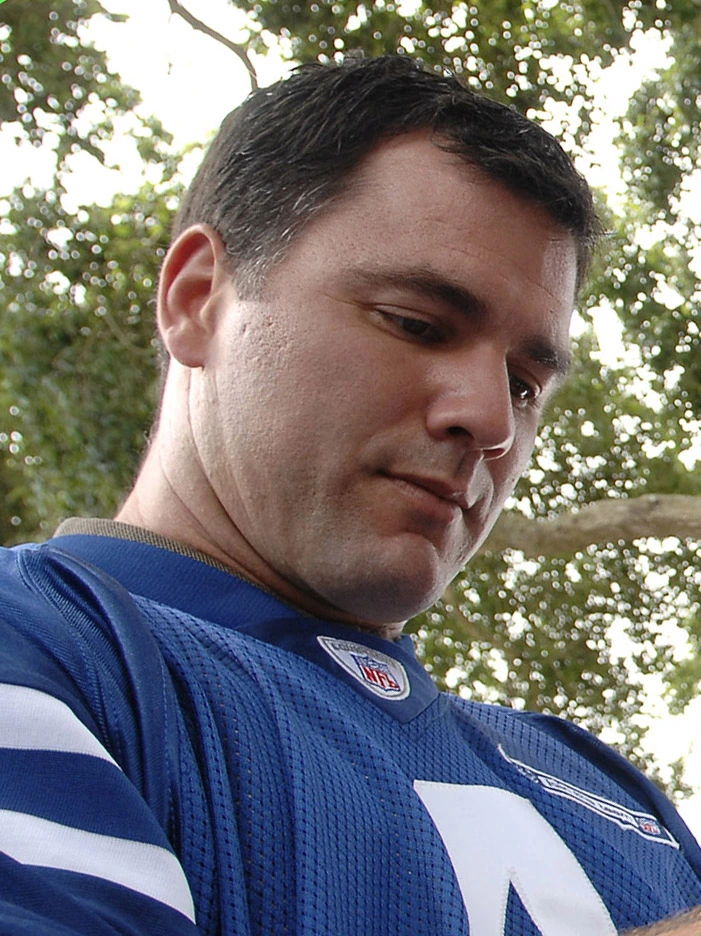
Adam Vinatieri played 24 NFL seasons, which is an almost absurd number for any position and especially for a placekicker. He spent his first 10 years with the New England Patriots (1996 to 2005) and his final 14 with the Indianapolis Colts (2006 to 2019). By the time he retired, he had accumulated 2,673 career points, making him the NFL's all-time leading scorer.
He also holds the regular-season record for field goals made at 599, along with a streak of 44 consecutive field goals that stood as an NFL mark. In February 2026, he was named to the Pro Football Hall of Fame as part of the Modern Era Class of 2026, which was one of the more deserved selections in recent memory given that he quite literally kicked the Patriots to two Super Bowl wins with last-second field goals.
That Hall of Fame induction matters for net worth purposes beyond the honor itself. HOF status typically boosts a player's brand value, speaking fees, memorabilia pricing, and endorsement viability for years after retirement. Vinatieri's 2026 induction means his wealth trajectory isn't necessarily flat just because he stopped playing in 2019.
The net worth estimate: what the range includes
When a net worth figure gets thrown around for an athlete, it's supposed to represent total assets minus total liabilities. In practice, for someone like Vinatieri, the inputs look something like this: gross career NFL earnings, minus federal and state income taxes, minus agent fees, minus living and lifestyle expenses accumulated over 24 years, plus whatever remains invested in real estate, financial assets, or business interests, plus any ongoing income from endorsements, appearances, or other ventures. The $15 million to $25 million range represents what's plausibly left over after working through that math with the public data available.
- Gross NFL career earnings (public record via contract databases): approximately $51.1 million
- Estimated taxes and agent fees (roughly 45 to 55 percent of gross earnings over a 24-year span): reduces gross to approximately $23 to $28 million in take-home
- Ongoing lifestyle costs, real estate, and spending over two-plus decades of professional life: estimated negative impact
- Investment and asset appreciation over time: partially offsetting factor
- Endorsement and appearance income (not fully public): additive, but amounts are not confirmed
- Post-retirement income (HOF appearances, memorabilia signings, charity-brand work): ongoing, modest positive factor
The $15M to $25M range is wide enough to honestly reflect what we don't know. It's not a hedge for the sake of hedging. His pre-tax career earnings of just over $51 million sound like a lot, but kickers historically earn less than quarterbacks or pass rushers, and his early Patriots contracts from the mid-to-late 1990s paid considerably less than what his later Colts deals commanded.
Where the money came from: salary, bonuses, and endorsements

NFL salary and contract earnings
Over The Cap, one of the more reliable contract-tracking databases for NFL historical data, lists Vinatieri's total career NFL earnings at $51,132,000. Of that, $11,432,000 came from his 10 seasons with New England, and $39,700,000 came from his 14 seasons with Indianapolis. The Colts years were clearly the financial peak: he signed a multiyear deal in 2006 that included a reported $3.5 million signing bonus and averaged roughly $2.5 million per year over its first three years, according to ESPN's reporting at the time. Spotrac's contract data shows later Colts deals including a $2 million signing bonus and $2 million guaranteed on individual contract years, reflecting how his value was priced as he aged into his 40s.
One thing worth understanding about NFL contract math: signing bonuses are prorated for salary-cap accounting, but players typically receive them in real cash upfront. So when a contract shows a $2 million signing bonus spread over four years on a cap page, Vinatieri actually pocketed that $2 million in year one. That distinction matters when trying to figure out cash flow timing versus what cap-based contract summaries show.
Endorsements and brand income

Vinatieri's endorsement portfolio was never in the LeBron James or Patrick Mahomes tier, but he wasn't invisible either. The most documented example is a Snickers television commercial where he appeared under the tagline 'Split the Uprights with Adam Nougatieri,' which shows at least some mainstream brand interest during his peak Super Bowl years. He also operates Clays 4 Charity, a shooting sports charity event tied to his personal brand. A vineyard estate in Napa Valley has been associated with his name in at least one public marketing filing, though the ownership details on that aren't fully established from public records alone.
Endorsement income for retired kickers, even legendary ones, tends to be modest compared to skill-position players. A reasonable working assumption is that endorsements added a few hundred thousand dollars annually during peak years, and post-retirement brand work (appearances, signings, charity events) likely generates ongoing income in the low to mid six figures annually. CelebrityNetWorth's page note specifically mentions that its Vinatieri estimate does not include endorsements in the earnings component it describes, which is a transparency marker worth noting.
Assets and investments that likely shape the total
Vinatieri played his home games in Indianapolis for 14 years and in the Boston area for 10 years before that. Real estate in both markets, and potentially in his home state of South Dakota (where he grew up and attended South Dakota State University), is a plausible component of his asset base. The vineyard-adjacent Napa Valley reference in public marketing materials suggests at least some interest in California real estate or wine country assets, though it would be irresponsible to claim ownership without verified sourcing.
Beyond real estate, athletes at Vinatieri's income level who played across a 24-year period typically accumulate diversified investment portfolios if they've had reasonable financial management. The NFL Players Association has had financial education and advisor referral programs for decades, and players at Vinatieri's stature (multiple Super Bowls, long-tenured contracts) generally had access to and could afford credible wealth management. None of that is confirmed for Vinatieri specifically, but it's a reasonable contextual assumption for how pre-tax earnings translate into retained wealth.
Taxes, spending, and why wealth is harder to hold than earn

The single biggest gap between Vinatieri's $51 million in gross career NFL earnings and any realistic net worth figure is taxes. He played most of his career in Massachusetts (no state income tax break there) and Indiana (a flat state income tax), plus the federal rate on high earners ran between 35 and 39.6 percent across his career years. After accounting for agent fees (typically 3 percent), federal taxes, and applicable state taxes, a rough estimate suggests he retained somewhere around 45 to 50 cents on every dollar of NFL income. That math alone brings the gross figure down to roughly $23 to $26 million in after-tax NFL income, before any lifestyle spending or investment activity is factored in.
Lifestyle spending over 24 years is not zero. Vinatieri married, raised a family, and lived as a professional athlete for nearly a quarter century. Housing, travel, family expenses, and the general cost of maintaining a lifestyle consistent with his income level would represent meaningful outflows over that timeline. The fact that he retained $15 to $25 million despite all of that actually speaks to relatively disciplined financial management, which is not a given for pro athletes.
One more volatility factor: investment performance and market exposure. If a significant portion of Vinatieri's wealth is in equity portfolios, real estate, or other market-exposed assets, the actual figure on any given day moves with those markets. A net worth estimate from one site in 2023 could look materially different from a figure calculated in mid-2026 purely based on market performance, with no change in personal spending or income.
How net worth estimates are actually calculated (and why sites disagree)
It's worth being direct about where numbers like these come from, because 'net worth' for a private individual is never truly public information. Here's the rough methodology most aggregation sites use, and the one we applied here.
- Start with documented gross career earnings from contract databases like Over The Cap and Spotrac, which pull from public filings, agent disclosures, and reported contract terms.
- Apply a tax and fee reduction model using known federal and state tax rates for the years and locations in question.
- Add estimates for endorsement income based on documented deals and comparable athletes in similar visibility tiers.
- Apply a lifestyle spending deduction based on income level, career duration, family status, and publicly observable spending signals.
- Layer in asset appreciation assumptions for real estate and investment holdings using broad market performance benchmarks.
- Arrive at an estimated range rather than a single number, with the range reflecting genuine uncertainty in the private variables.
CelebrityNetWorth claims to use a proprietary algorithm drawing on publicly available information, but a New York Times report noted that the site reportedly employed no computer scientists at the time of the review, which raises fair questions about how algorithmic the process actually is. That doesn't make their $25 million figure wrong, but it's a reason to treat it as an estimate with real uncertainty, not a audited balance sheet. CelebsMoney's $15 million figure, at the other end, may apply more conservative assumptions about taxes or asset retention. Neither site shows its work in detail, which is why publishing the methodology explicitly, as we've done here, is more useful to a reader trying to evaluate the claim.
If you want to verify or cross-check, the most reliable starting point is Over The Cap's career earnings page for Vinatieri, which gives you the real gross earnings number to anchor any calculation. Everything else, taxes, spending, investments, endorsements, is estimation. Any site claiming a precise single figure without uncertainty markers should be read skeptically.
How his net worth likely grew across different career eras
| Career Era | Approximate Annual Earnings | Estimated Net Worth Trajectory | Key Factors |
|---|---|---|---|
| New England, early years (1996–2000) | $500K–$800K/year | Modest accumulation, limited savings | Low kicker salaries, early career spending patterns, building a market profile |
| New England, Super Bowl era (2001–2005) | $1M–$1.5M/year | Wealth building accelerates | Super Bowl visibility, Snickers-type endorsements, bonus opportunities, rising salary |
| Indianapolis, early Colts years (2006–2012) | $2M–$3M/year | Peak earning and accumulation phase | $3.5M signing bonus in 2006, Peyton Manning-era team success, higher base salaries |
| Indianapolis, late career (2013–2019) | $2M–$3.5M/year | Continued earnings, some lifestyle scaling | Late-career contract renegotiations, age-related uncertainty, sustained performance premium |
| Retirement and post-career (2020–2026) | Endorsements, appearances, investments | Wealth sustained or modestly grown | Market performance on invested assets, HOF announcement in 2026 boosts brand income |
The arc here is fairly typical for a disciplined long-career athlete: modest early accumulation, a step-change in earnings when Super Bowl wins made him a household name, a peak earning phase in Indianapolis, and then a transition into post-career wealth maintenance and modest brand income. The 2026 Hall of Fame induction is a meaningful event in this timeline because it typically unlocks renewed endorsement interest, higher memorabilia signing fees, and increased appearance demand. Vinatieri's net worth in mid-2026 may actually be trending slightly upward compared to where it was in 2021 or 2022, even though his playing income ended in 2019.
For comparison, other athlete net worth profiles in a similar range (long career, multiple championships, not a skill-position superstar) tend to cluster in the $10 million to $30 million band, which is consistent with where Vinatieri lands. If you are also looking at another athlete’s figures, a related read is Verdasco net worth, since these site-to-site estimates often follow similar uncertainty patterns For comparison. His profile shares some structural similarities with other long-tenured role-player athletes across professional sports, where career longevity and championship visibility drive wealth more than a single mega-contract.
The bottom line: treat $15 million as a conservative floor and $25 million as an optimistic ceiling. A figure around $18 to $22 million reflects the most balanced reading of his gross earnings, realistic tax burden, likely lifestyle costs, and reasonable investment performance. This is also why sources discussing Verdis Norton net worth may arrive at different totals or timelines. The Hall of Fame factor may push the actual figure closer to the upper end of that range going forward, but that's a qualitative judgment, not a verified figure.
FAQ
Does Adam Vinatieri’s Hall of Fame induction automatically mean his net worth increased right away?
Not automatically. Induction can increase short-term demand for appearances and speaking, and it can strengthen brand and memorabilia value over time, but any “net worth jump” depends on how much new revenue those opportunities generate and whether it translates into net asset growth after taxes and spending.
Why do net worth sites sometimes give numbers that don’t match the same gross career earnings?
Because net worth estimates are not the same thing as career earnings. Sites make different assumptions about tax rates across years, agent fees, lifestyle spending levels, and how much income goes into taxable accounts versus retirement plans or other vehicles that are harder to track from public data.
What’s the biggest mistake people make when converting gross NFL earnings into net worth?
They assume taxes and spending scale linearly and ignore timing. Signing bonuses are paid as cash earlier than cap accounting suggests, and investment behavior plus spending patterns can shift retention substantially over a 24-year career.
How can I sanity-check whether $15M to $25M is reasonable for vinatieri net worth?
Start with the known gross earnings anchor, then apply a reasonable retained rate after taxes and agent fees (the article discusses roughly retaining under half of gross NFL dollars). After that, subtract a plausible multi-decade lifestyle budget and add only the portion of endorsements and investments that likely remained net of spending.
Do endorsements meaningfully change the final net worth range for Vinatieri?
Usually not dramatically. Compared with skill-position players, his endorsement profile likely contributed more to steady income and post-retirement brand work than to a total that dominates the estimate. Most of the range still comes from retained NFL compensation plus investment performance.
Is his wealth more likely to be cash and stocks, or real estate?
Given his multi-state career and the market signals mentioned in the article, real estate could be a meaningful component, but the exact mix is unknown. Net worth can also be affected by illiquidity, leverage (mortgages), and the timing of purchases and sales, which are rarely fully visible in public records.
Could his net worth estimate be lower than expected because of debt or lawsuits?
It’s possible in any private individual’s case, but there’s no verified detail in the article body to quantify that for Vinatieri. Most public estimates assume net worth is dominated by assets minus typical liabilities, not unusual debt events, so the range should be treated as uncertain rather than definitive.
How much volatility should I expect year to year for vinatieri net worth?
Moderate to high, depending on asset exposure. If a larger share is tied to equities, valuation swings can move net worth appreciably even with no change in income. Real estate can move more slowly, while business interests (if any are significant) can add additional variability.
Why might CelebrityNetWorth and similar sites disagree so much on vinatieri net worth?
They may use different default assumptions for tax burden, whether endorsements are fully included, and what portion of earnings becomes investable assets versus consumed by lifestyle. The article notes one site explicitly excludes endorsements from its earnings component, which alone can push totals in opposite directions.
If I want the most accurate number, what can I actually verify from public information?
You can reliably verify the gross career earnings anchor from contract databases, and you can verify high-level public career milestones. Everything else in net worth, such as current asset values, investment returns, and personal liabilities, generally cannot be fully confirmed publicly, so precision beyond the range should be treated skeptically.