
Bruno Vespa's net worth is estimated at roughly 8 to 12 million euros as of mid-2026, based on aggregated signals from his documented Rai compensation, decades of publishing royalties, and indirect indicators around real estate and corporate affiliations. That range carries real uncertainty because no full asset disclosure exists for him, but the floor is reasonably well-anchored by years of high-profile contract reporting from credible Italian outlets.
Bruno Vespa Net Worth: Transparent Estimate and Sources

Marcus Rothwell
26 Jun 2026
Who Bruno Vespa is (and why people search his net worth)

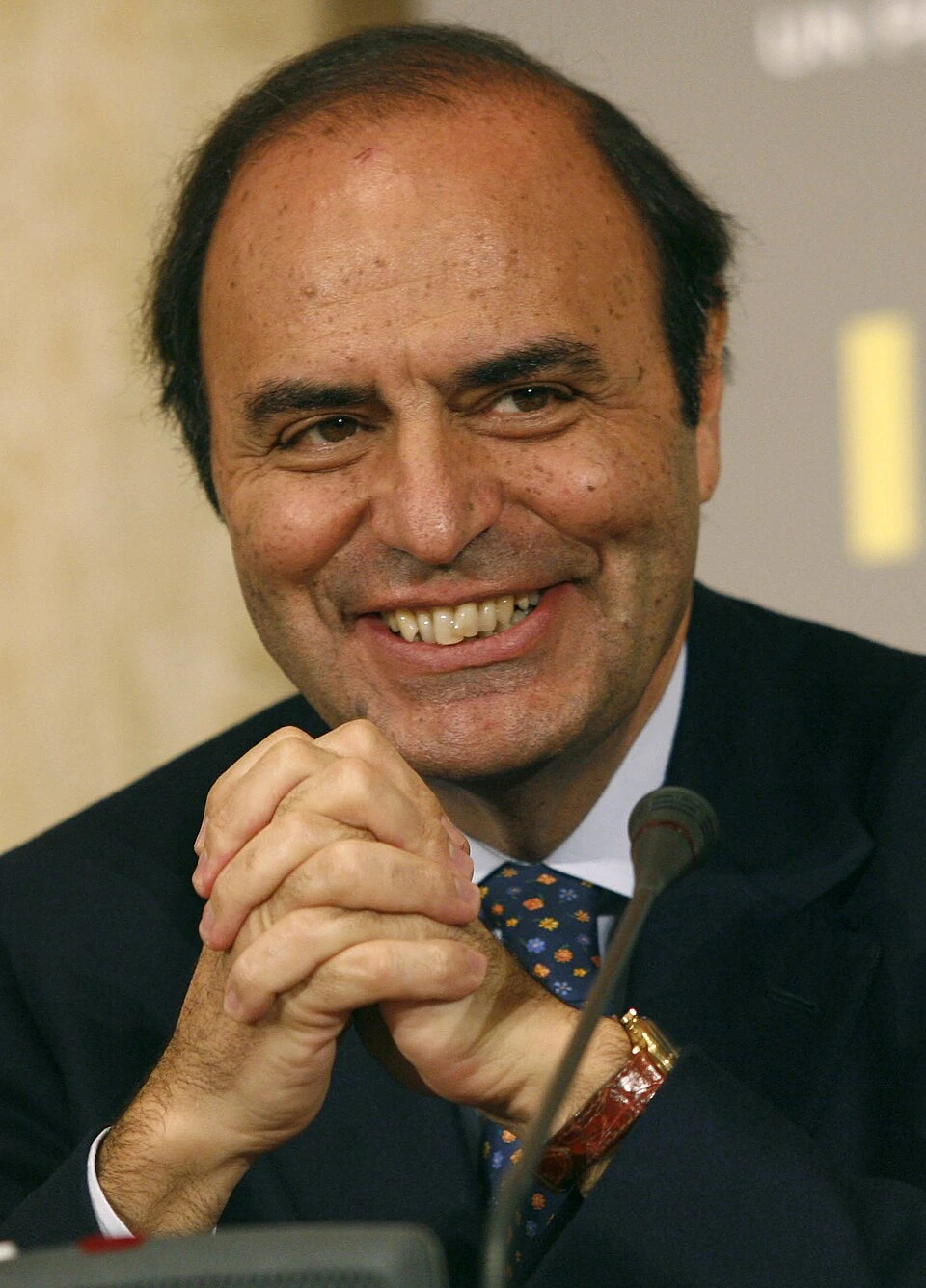
The Bruno Vespa behind virtually every search on this query is Bruno Paolo Vespa, born May 27, 1944, one of Italy's most recognizable television journalists. He started his career in journalism in 1960, joined RAI in 1969, and directed TG1 (RAI's flagship news program) from 1989 to 1992. His most enduring project is 'Porta a Porta,' the late-night political talk show he created and has hosted on Rai Uno since January 22, 1996, with Romano Prodi as its very first guest. The show has run for three decades, making Vespa one of the longest-serving prime hosts in Italian public broadcasting.
People search his net worth because he sits at a genuinely unusual intersection: a public employee (through RAI, a state broadcaster) who has argued, credibly, that his contract is structured as an 'artistic performance' arrangement rather than a standard employment contract. That distinction matters enormously for Italian compensation cap rules, and it generated years of parliamentary debate, press coverage, and public outrage that put real numbers into circulation. Add a prolific publishing career with Mondadori and Rai Libri, and the financial picture becomes genuinely interesting to map.
It is worth being explicit: there is no other Bruno Vespa with comparable public visibility in mainstream financial or media reporting. For a specific figure, see the net worth of Sebastian Vettel comparison. This article focuses entirely on him.
How we estimate net worth here
Net worth is total assets minus total liabilities. Assets are typically categorized into financial assets (such as cash and investments) and non-financial assets (such as property), which matches the net-worth method of aggregating asset categories before subtracting liabilities financial and non-financial assets. The challenge is that for Italian media figures, neither side of that equation is fully public. No mandatory wealth disclosure applies to Vespa. So the methodology here combines several categories of evidence, weighted by source quality.
- Compensation reporting from credible Italian outlets (Corriere della Sera, la Repubblica, Il Fatto Quotidiano, ANSA, Il Secolo XIX, Affaritaliani) that covered the RAI cap debate and published specific contract figures
- Parliamentary records: a Camera dei Deputati commission bulletin from March 2017 directly references 'compensi lordi percepiti' in the Vespa context, giving the income signals some institutional grounding
- Publishing activity: RAI Libri catalog pages and mainstream press coverage of book launches provide signals for royalty income streams, though actual sales figures are not disclosed
- Corporate and real estate leads: L'Espresso investigative reporting (2020) on San Raffaele governance references a holding company ('Velca') connected to Vespa's wife and family; Diritti Globali (2011) placed him as a tenant of a Propaganda Fide-linked apartment at roughly 10,000 euros per month in rent
- Regulatory context: FNSI analysis and parliamentary discussion of the 240,000-euro RAI compensation cap framework and how 'artistic contract' exceptions interact with it
All of these are income and asset signals, not disclosures. The estimate is built by taking the most credible compensation figures as a baseline for annual cash accumulation, applying reasonable assumptions about savings rates over a 30-year career at high income levels, and then adjusting for lifestyle costs (including what the Rome apartment rental signals about expenditure) and visible liabilities. The result is a range, not a point estimate, and that range is intentionally wide to reflect genuine uncertainty rather than false precision.
The net worth estimate: the range and what drives it

The most defensible estimate for Bruno Vespa's net worth as of June 2026 is 8 to 12 million euros. VaudtterI Bottas net worth is often estimated separately from his racing earnings, so it is worth checking credible, source-based figures rather than viral summaries Bruno Vespa's net worth. A more aggressive top-end estimate (some Italian aggregator sites go as high as 15 to 20 million euros) is possible but not well-supported by primary evidence, and this site does not adopt it without better sourcing.
The primary driver is accumulated Rai income over three decades. When the compensation cap debate peaked around 2017, Corriere della Sera reported a figure of approximately 1. 8 million euros per year in gross compensation. Il Secolo XIX and Affaritaliani subsequently reported a contract renewal that cut the figure by more than 30 percent, landing at approximately 1.
2 million euros for 120 episodes. Even at the reduced post-2017 rate, and accounting for Italian income tax (which at this bracket is substantial, historically around 43 percent in the top marginal rate), net annual earnings from RAI alone would have been in the range of 680,000 to 1 million euros per year after tax.
Over a multi-decade career at varying but consistently high compensation levels, and even with significant lifestyle expenditures, accumulated wealth in the 8-to-12-million range is conservative rather than inflated.
The secondary drivers are book royalties and possible equity or dividend income through family corporate structures. These are harder to quantify but materially real: Vespa is a prolific author with books published through Mondadori and Rai Libri on topics ranging from Italian political history to the Quirinale. His norbert vettel net worth coverage often comes down to how these sorts of income streams translate into long-term assets book royalties.
Best-selling political books in Italy can generate royalties in the tens to hundreds of thousands of euros per title, and Vespa has published more than 20 books over his career. The L'Espresso investigation into San Raffaele governance is the most specific corporate-affiliation lead, but the actual equity value of the 'Velca' holding structure and Vespa's indirect exposure to it cannot be confirmed without Italian company registry verification.
Breaking down the income streams
RAI contract compensation

This is the biggest and best-documented income stream. The 'artistic contract' framing that Vespa and his representatives used from at least 2011 onward was specifically designed to avoid the 240,000-euro annual cap on public broadcaster compensation. Vespa wrote directly to RAI's board asserting that his contract fell outside the cap's scope. Parliamentary commission bulletins from 2017 reference gross compensation figures in the context of his arrangement. The peak figure reported in Italian press was approximately 1.93 million euros gross annually; after the 2017 renegotiation, it dropped to approximately 1.2 million euros for 120 episodes per season. Both figures are gross before Italian income tax.
Book publishing and royalties
Vespa has published extensively, with titles covering Italian political history, figures like Mussolini, and the Quirinale (Italian presidency). A November 2021 la Repubblica report tied a new book release to mainstream coverage, confirming continued publishing activity well into his late career. Italian publishing royalties for non-fiction typically run 8 to 12 percent of cover price, and a successful political book selling 50,000 to 100,000 copies (reasonable for a figure of his prominence) would generate 100,000 to 300,000 euros in royalties per title. This is meaningful supplemental income but not a dominant wealth driver.
Corporate and investment affiliations
The L'Espresso investigation is the most actionable lead here, identifying a holding company ('Velca') linked to Vespa's wife and described in the context of San Raffaele corporate governance. If the family holds equity in productive corporate structures, this could represent a meaningful asset. However, this article does not confirm equity values without Italian company registry verification, and readers should treat this as a lead rather than a confirmed asset figure.
Speaking engagements and media appearances
Hosts of long-running Italian political talk shows command premium fees for conference appearances and private events. This income stream is real but unquantifiable without disclosures. It likely contributes a few hundred thousand euros annually at most, and it is folded into the general wealth estimate rather than broken out.
Assets vs. liabilities: what the evidence suggests

| Category | Signal / Evidence | Confidence Level |
|---|---|---|
| Real estate (Rome) | Diritti Globali (2011) reports 10,000 euros/month rent for Propaganda Fide-linked apartment — suggests renting rather than owning prime property | Low-medium (single source, 2011) |
| Corporate equity (Velca holding) | L'Espresso (2020) investigation links Vespa's wife and family to 'Velca' holding in San Raffaele governance context | Low (indirect, unconfirmed equity value) |
| Publishing income assets | Rai Libri catalog and press coverage confirm ongoing publishing activity; royalties represent recurring income, not a capitalized asset | Medium |
| RAI contract income (historical) | Multiple primary Italian outlets and parliamentary records confirm gross compensation in 1.2–1.93 million euro range | High |
| Tax liability (Italian) | Top marginal rate of ~43% applies to gross income at this level; significantly reduces net cash accumulation | High (structural) |
| Legal liabilities | Italian Wikipedia references defamation-related legal history; no primary court records confirming large financial settlements were found for this research | Low-unknown |
| Lifestyle expenditure | 10,000 euros/month rent figure (if accurate) implies roughly 120,000 euros/year in rent alone, a real liability signal | Low-medium (single source) |
The key tension in the asset picture is that Vespa appears, on available evidence, to be a renter of his primary Rome residence rather than an owner. If that is accurate, it removes a common wealth-building asset (prime Roman real estate) from the asset column and adds ongoing rent expenditure to the liability side. That said, the 2011 Diritti Globali report is a single source from 15 years ago and cannot be treated as definitive for his current housing situation.
On the liability side, Italian income tax at his reported compensation level is the most structurally certain factor. Gross earnings of 1.2 to 1.93 million euros would generate annual tax obligations of roughly 500,000 to 830,000 euros, depending on deductions and the structure of his 'artistic contract.' Legal liabilities are harder to assess: defamation-related references exist in Italian Wikipedia, but specific settlement figures from court records were not confirmed in accessible primary sources for this research.
How his wealth has shifted over time
Vespa's financial trajectory follows a clear shape: a long career-building phase through the 1970s and 1980s, an acceleration through his TG1 directorship years (1989 to 1992), and then a dramatic step-change when 'Porta a Porta' launched in January 1996 and became a durable prime-time institution. The show gave him a platform that justified the 'artistic' compensation structure that distinguishes his RAI contracts from standard employee pay.
- 1969–1988: RAI hire and career development phase; compensation at professional but not exceptional levels for Italian public broadcasting
- 1989–1992: TG1 directorship; elevated institutional role, higher compensation and profile
- 1996: 'Porta a Porta' launches; marks the beginning of the high-value artistic contract era
- 2011: Vespa's RAI contracts are formally structured as 'prestazioni artistiche' (artistic performances), the framing that allows cap exemptions
- 2017: Peak public scrutiny of compensation; press reports a ~1.93 million euro annual gross figure; parliamentary and press pressure leads to a renegotiation
- 2017 (post-renegotiation): New contract at approximately 1.2 million euros for 120 episodes, a reduction of over 30%
- 2020–2021: Continued publishing activity (new books via Mondadori and Rai Libri); L'Espresso corporate investigation adds a family-affiliated holding company dimension
- 2026: 'Porta a Porta' continues; Vespa is in his early 80s and remains one of Italy's longest-serving political talk show hosts
The 2017 renegotiation is the most significant documented wealth-trajectory event. A cut from roughly 1.93 million to 1.2 million euros gross annually represents a meaningful reduction in annual after-tax cash flow of approximately 415,000 euros. Sustained over multiple years, this is not trivial, and it likely explains why the more aggressive net-worth estimates circulating online (which seem to extrapolate peak compensation for the full career) are probably overstated.
How to verify the estimate and avoid misinformation
If you want to check what is actually credible here, the hierarchy of sources runs roughly like this: parliamentary records and commission bulletins first (Camera dei Deputati, which are public and searchable), then major Italian dailies (Corriere della Sera, la Repubblica, ANSA), then specialist journalism (Il Fatto Quotidiano investigations), then industry body documents (FNSI analysis of RAI compensation policy). Aggregator sites, including Italian versions of 'celebrity net worth' pages, should be treated as secondary narratives that sometimes misread the primary reporting. If you are tempted by celebrity net worth pages for athletes, also compare results to sources like Forbes when looking up Sebastian Vettel net worth forbes. Reddit discussions are useful for understanding how misinformation spreads (including the specific case of people naively applying the 240,000-euro cap figure as if it were Vespa's actual salary) but are not evidence.
There are a few specific red flags to watch for when you see published Bruno Vespa net worth figures. First, any site claiming a specific round number (say, exactly 15 million euros or exactly 20 million euros) without citing primary sources is fabricating precision it does not have. As a general framework, net-worth scam red flags often involve unverifiable “leaks,” no primary sources, and unverifiable asset claims blank" rel="noopener noreferrer">unverifiable “leaks”. Second, figures that do not account for Italian income tax on gross RAI compensation are significantly overstated in terms of accumulated wealth. Third, corporate asset claims linked to the Vespa family that don't reference verifiable Italian company registry data should be treated as unconfirmed leads, not facts.
If you want to go deeper, the most productive verification steps are: searching the Camera dei Deputati online bulletin archive for commission proceedings from 2017 that reference RAI compensation debates; checking the Italian company registry (Registro delle Imprese) for 'Velca' and any associated entities; and looking up L'Espresso's 2020 San Raffaele investigation directly for the corporate governance detail. None of these steps will give you a complete picture, but they will tell you whether the primary evidence actually supports the figures in circulation.
One final note on interpreting any net worth figure: the published estimates for Italian media figures, including this one, tend to be snapshots that age quickly. Contract renewals, real estate transactions, and family corporate activity can shift the number meaningfully. The range of 8 to 12 million euros used here is calibrated to mid-2026, and it should be revisited as new public information becomes available.
If you are researching comparable Italian-context wealth profiles, noting that figures for public-sector adjacent earners in Germany and beyond (such as those connected to major automotive or media conglomerates) involve very different transparency frameworks, since Italian broadcasting compensation has been unusually well-documented due to the public cap debate. For comparison, the CEO of Volkswagen net worth is often estimated using similar public reporting and company related disclosures, though exact figures can still be hard to verify.
FAQ
Why does the “artistic performance” contract matter for Bruno Vespa’s net worth estimate?
Because it changes how analysts treat his compensation when comparing it to public broadcaster pay caps and standard employment benchmarks. If his arrangement is classified differently, then applying the wrong cap logic can lead to overestimating annual after-tax cash flow, which then inflates a net worth projection.
Is 8 to 12 million euros a conservative or aggressive range?
It is intended to be conservative relative to many online numbers, since it starts from documented RAI compensation levels and then adds royalties and other plausible income. More aggressive estimates usually overproject by treating peak gross pay as the full-career earning base or by underestimating the impact of Italian income tax.
How much do taxes change the net worth outcome for someone like Vespa?
They can be the difference between an estimate that behaves plausibly and one that does not. The article’s method reflects that top-bracket Italian income tax at these earnings historically can be around the low-to-mid 40% range, so ignoring tax can turn realistic annual accumulation into a much larger long-term asset assumption.
Could Vespa’s housing situation significantly affect the net worth figure?
Yes. If he rents his primary Rome residence, that removes a major potential asset category (prime property) and increases predictable outflows (rent and related costs). The article treats housing evidence as suggestive rather than definitive, so readers should not treat residence status as confirmed asset information.
Do book royalties meaningfully move the net worth needle, or are they mostly noise?
They can be meaningful as supplemental income but typically do not dominate when royalties are estimated per title and spread across multiple releases. The article suggests plausible per-title royalty ranges and notes that even with more than 20 books, royalties are usually smaller than accumulated broadcaster income.
How should I interpret claims about equity in “Velca” or other family structures?
As leads, not verified asset values, unless backed by Italian company registry data. The article highlights that corporate-affiliation reporting can identify entities, but without registry verification, you cannot reliably translate ownership into an estimated equity value for net worth.
Could conference appearances and private events change the estimate by a lot?
Probably not by a lot. For a net worth range built primarily on RAI compensation, event and speaking income is treated as likely present but unquantified, and the article assumes it is folded into the overall model rather than treated as a separate major driver.
Why do some websites publish exact numbers like exactly “15 million” or “20 million” for his net worth?
Because exact round numbers without primary sourcing are usually not defensible. The article’s caution is that many aggregator sites present precision they do not actually have, especially when they do not model tax treatment or do not anchor assumptions to primary compensation reporting.
What’s the fastest way to sanity-check whether a published estimate is inflated?
Check whether the estimate accounts for the gross-to-net reality (Italian income tax), whether it distinguishes pre- and post-2017 compensation levels, and whether it relies on verifiable primary records versus vague claims. Estimates that ignore the tax and the 2017 renegotiation are the most likely to be overstated.
If there is no complete asset disclosure, what evidence would most improve confidence?
The biggest improvements would come from primary documents that confirm compensation structure details and from Italian registry verification of any relevant holdings. The article lists practical next steps like searching Camera dei Deputati records and checking Registro delle Imprese for entities tied to “Velca.”
Can the net worth range change quickly over time, and why?
Yes. Even when income is well documented, net worth can shift with contract changes, major real estate transactions, and family corporate developments. The article recommends treating the 8 to 12 million euros estimate as a mid-2026 snapshot and updating when new public information appears.