
As of March 2026, the most widely cited estimate for Sebastian Vettel's net worth sits around $140 million. You can also compare this range to common search queries about Norbert Vettel net worth to see how the numbers are typically framed online. That figure comes from Celebrity Net Worth, which is the most commonly referenced source you'll find repeated across aggregator sites. Our own research-based estimate lands in a similar range: roughly $120 million to $160 million, with moderate-to-high confidence in the middle of that band. The uncertainty at both ends reflects genuinely incomplete data around his private investments, post-retirement income streams, and the current value of his asset portfolio, all of which we'll walk through below.
Net Worth of Sebastian Vettel: Estimate, Sources, Breakdown

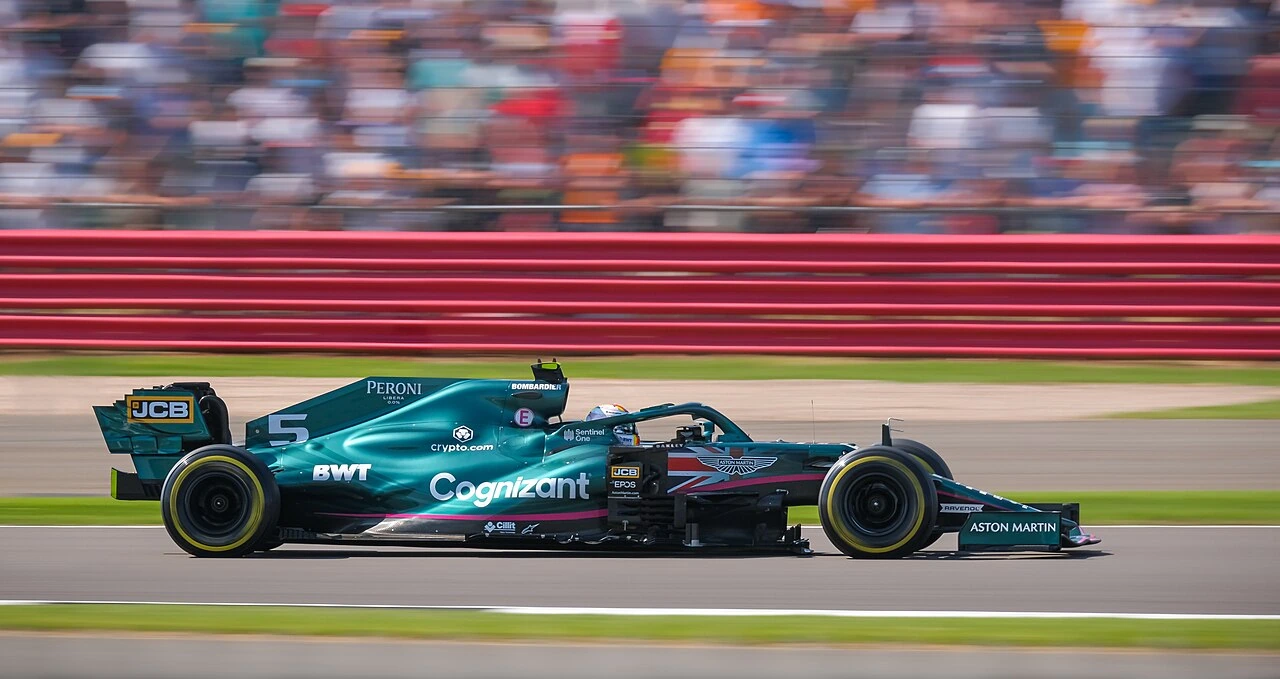
Vettel retired from Formula 1 at the end of the 2022 season, so the wealth picture is now essentially fixed on the career earnings side. What moves the number going forward is how his existing assets are managed, whether endorsement or speaking income continues, and what he does publicly in the business world. For now, the $140 million headline is a reasonable anchor, but it deserves context. If you're comparing how wealth is modeled for executives, you can also look at the CEO of Volkswagen net worth.
The headline estimate and confidence range

| Estimate Source | Cited Figure | Confidence Level |
|---|---|---|
| Celebrity Net Worth | $140 million | Low-moderate (methodology opaque) |
| This site's aggregated estimate | $120M–$160M | Moderate (based on verifiable income inputs) |
| FormulaPedia (March 2026 update) | Consistent with ~$140M range | Moderate (uses public contract data) |
The $140 million figure is used as a working estimate across multiple sites, but it is not a verified balance sheet number. Vettel has never disclosed his net worth publicly. This is an aggregated estimate built from career contract data, reported endorsement deals, known asset activity, and reasonable assumptions about spending and tax. The honest answer is that the real figure could be meaningfully higher or lower depending on his private investment performance, which no outside source can verify.
How this site estimates a professional athlete's net worth
Every net worth profile on this site is built from the ground up using publicly available, verifiable financial signals rather than relying solely on third-party aggregators. For an athlete like Vettel, that means pulling from reported contract values, blank" rel="noopener noreferrer">credible sports finance databases like Spotrac, journalism from Autosport, Motorsport Magazine, and Forbes, and any documented public financial events such as asset sales or formal business registrations. We layer those inputs together, apply conservative assumptions where data is missing, and assign a confidence tier to the final range.
We do not use a black-box algorithm. Sites like Celebrity Net Worth describe a 'proprietary algorithm' based on publicly available information, but that methodology has drawn criticism for lacking transparency, including a noted New York Times observation that the company employs no computer scientists despite the algorithmic framing. We take a different approach: we document what we know, flag what we're estimating, and tell you explicitly where the gaps are. You can read more about how Sebastian Vettel's net worth is tracked by Forbes and similar outlets if you want a deeper look at how major publications handle these figures.
Where the money came from: F1 career earnings

Vettel's F1 career is the single largest input to any net worth estimate. He drove in Formula 1 from 2007 to 2022 across four teams: BMW Sauber, Toro Rosso, Red Bull Racing, Ferrari, and Aston Martin. The bulk of his career earnings came from his time at Red Bull (2009 to 2014) and Ferrari (2015 to 2020), both of which involved top-tier pay packages.
The most widely reported single contract figure is his 2014 move to Ferrari, which Forbes reported at the time as an $80 million deal. That number was described as a multi-year arrangement and was noted as potentially making Vettel the world's highest-salaried athlete at the time, though the full official terms were never publicly confirmed by either party. At Red Bull, his contract was extended in March 2011 per Spotrac's contract history, with salary estimates from credible reports placing his annual earnings in the $25 to $40 million range during the championship years. His final stint at Aston Martin involved a two-year contract, the value of which was more modest given the team's then-developing status and Vettel's stated reduced commitment before retirement.
FormulaPedia's March 2026 analysis attributes a 'significant chunk' of Vettel's wealth directly to his F1 contracts, which aligns with the math. If you conservatively estimate his total F1 career gross earnings at $200 to $250 million before taxes (factoring in reported Ferrari and Red Bull salary ranges across roughly 16 active seasons), and apply realistic tax rates across his years of Swiss residency and race-country withholding obligations, the post-tax accumulated wealth that could convert into net worth is well within the $100 to $150 million range, even after accounting for lifestyle expenditure. For reference, Valtteri Bottas's net worth illustrates how F1 mid-tier earners compare to top-bracket drivers like Vettel.
Prize money and constructor bonuses
Beyond base salary, F1 drivers can receive performance bonuses tied to championship results. Vettel won four consecutive World Drivers' Championships from 2010 to 2013, all with Red Bull. Teams also receive Constructors' Championship prize money, portions of which can be passed to top drivers under bonus arrangements. Exact bonus figures for Vettel have never been officially confirmed, but the combination of championship wins and Red Bull's dominant period almost certainly added tens of millions in performance-linked income on top of his base contracts.
Endorsements and off-track income
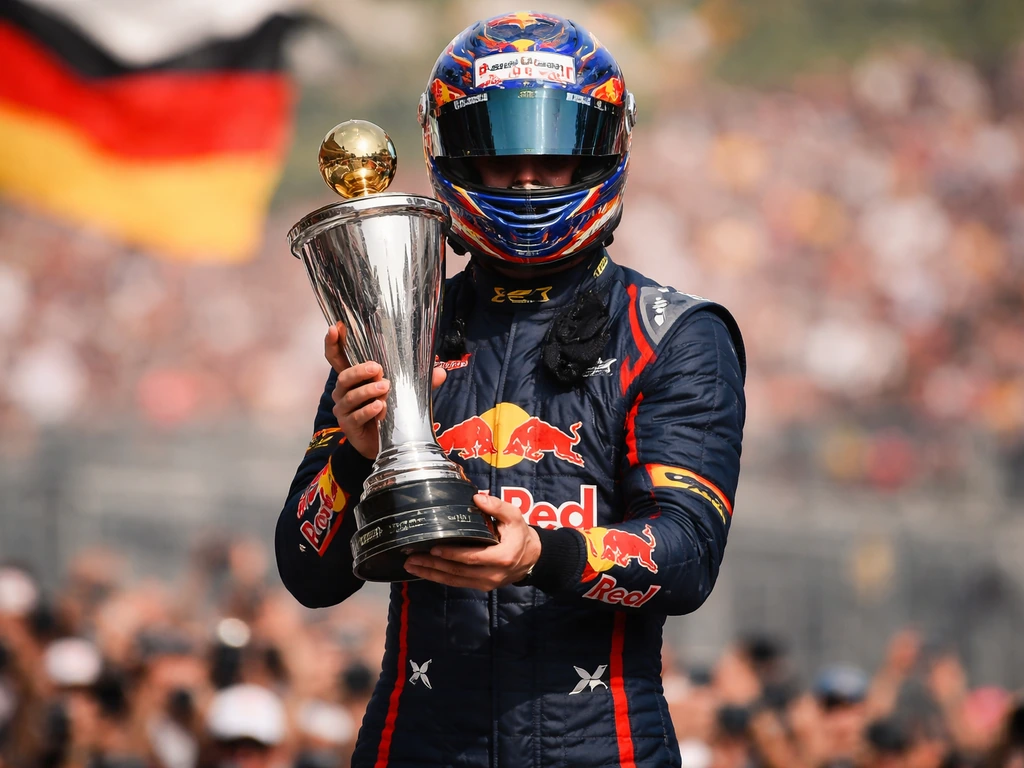
Vettel was among the most marketable F1 drivers in the world during his Red Bull championship years. The most documented brand relationship was with Infiniti: he became the brand's first global ambassador, a role tied directly to Infiniti's title partnership with Red Bull Racing. That kind of brand ambassadorship for a major automotive manufacturer typically carries seven-figure annual fees at the elite level, though Vettel's specific Infiniti deal was never broken down publicly.
Helmet manufacturer deals, apparel arrangements, and personal sponsor logos visible on his race suits over the years represent additional income, though these are harder to quantify from public records. His team's partnerships, such as Red Bull's relationship with Pepe Jeans (renewed in April 2016), contributed to the commercial environment that made top-driver sponsorship packages more lucrative during that era, even if those team-level deals don't translate directly to driver income.
Since retirement, Vettel's off-track income sources have shifted. He has been booked through the AAE Speakers Bureau for paid speaking engagements, corporate appearances, and product endorsements. These aren't disclosed fees, but professional keynote speakers at his profile level typically command fees in the $50,000 to $200,000 range per engagement. His public focus on environmental issues post-retirement has also generated media attention, which keeps his public profile active for potential commercial arrangements, though he has visibly stepped back from the high-volume brand partnership model of his racing years.
Assets, investments, and what's publicly documented
The most visible asset story around Vettel in recent years was the sale of his supercar collection. In 2021, Autosport reported that he put eight supercars from his personal collection up for sale. A separate report noted he sold multiple Ferraris as part of a broader downsizing of that collection. For context, a private supercar collection of that caliber, particularly given his Ferrari ties and access to limited-edition models, could represent several million dollars in total asset value. The fact that he was selling rather than buying at that stage is consistent with either a portfolio shift, a lifestyle simplification (publicly documented in his case), or both.
Vettel is known to be based in Switzerland, which is a common choice among high-earning athletes for its favorable tax treatment. Swiss residency itself suggests a degree of financial planning sophistication, but the specific structure of any trusts, holding companies, or investment vehicles he uses is not publicly documented. Real estate holdings, equity investments, and business stakes, if any exist, have not been disclosed in any credible public reporting reviewed for this article. This is a genuine gap in the estimate, and it's one reason the range ($120M to $160M) is wider than we'd prefer.
What we can say with reasonable confidence: the wealth that is accounted for through verifiable income channels (contracts, reported endorsements) alone supports a net worth well above $100 million. Everything on top of that is plausible but unverified.
Why different websites give different numbers
If you've searched Vettel's net worth across multiple sites, you've probably seen figures ranging from around $100 million to over $150 million. If you're also comparing estimates for Bruno Vespa net worth, keep in mind that different methods and source transparency can lead to very different figures Vettel's net worth. The variation isn't random, but it does reflect real disagreements in approach. Here are the main reasons estimates diverge:
- Timing: A figure calculated in 2018 during peak Ferrari salary years will differ from one calculated post-retirement in 2023 or 2026, when no new F1 income is flowing in.
- Contract value assumptions: The Ferrari and Red Bull salary figures that circulate in media were never officially confirmed. Different sites use different reported numbers as inputs, leading to different totals.
- Tax treatment: Some estimates use gross career earnings without modeling taxes; others apply rough effective rates. A $200 million gross career can look like $90–120 million net after a realistic tax estimate.
- Asset valuation: Car collections, real estate, and investments fluctuate. A site that assigned high value to his supercar collection before the 2021 sales would show a higher figure than one updated afterward.
- Methodology transparency: Sites like Celebrity Net Worth produce widely cited figures but have faced criticism for opaque methods. Their $140 million estimate may be reasonably calibrated or may simply have been anchored to earlier estimates without fresh inputs. There's no way to audit it externally.
- Lifestyle cost assumptions: Some models subtract estimated annual spending; others don't, which creates meaningful variation in the final net figure.
The honest answer is that no public source has full visibility into Vettel's finances. Every number you see, including ours, is a structured estimate built on incomplete data. The difference between a good estimate and a bad one is how transparent the methodology is and how well it accounts for what's unknown. You can also compare how similar estimation challenges play out for Seb Vettel's net worth across different research methodologies to see how assumptions shift the final figure.
How to check for updates and what would move the number
Since Vettel retired after 2022, the major income driver (F1 salary) is now static in the historical record. Future movements in his net worth estimate would most likely come from one of the following signals:
- A return to professional motorsport or a team ownership role, which would introduce new income and equity data.
- A publicly documented business investment, startup stake, or fund involvement, similar to what other retired athletes have done.
- A major asset sale (real estate, remaining car collection, art) that gets reported in credible motorsport or business media.
- A high-profile brand partnership announcement, which would signal renewed endorsement income.
- Tax or legal filings in Switzerland or Germany that enter public record, though these are rarely accessible for private individuals.
For monitoring purposes, the most reliable sources to watch are Spotrac for any contract activity, Forbes and Bloomberg for business or investment news, and Autosport or Motorsport Magazine for asset-related stories. Celebrity Net Worth updates its figures periodically but doesn't publish a changelog, so its number can lag real-world events by months or years.
If you want to interpret any net worth figure you find, the most useful question to ask is: what year are the inputs from, and does the estimate account for taxes and spending? A gross career earnings figure of $200 million sounds very different from a post-tax, post-spending net worth estimate of $120 to $160 million, but both could be describing the same person accurately, just through different lenses. Vettel's case is not unusual for top-tier F1 drivers of his era, and the range we've outlined here is consistent with what credible financial journalism has suggested across multiple reporting cycles.
FAQ
Why do estimates for the net worth of Sebastian Vettel sometimes differ by $30 million or more?
Most of the spread comes from how each site treats unknowns, especially investment performance after retirement, the tax and spending assumptions, and whether they count uncertain sponsorship or business-related income. Even when contract figures are similar, converting gross career earnings into net worth can shift the result a lot.
Does Sebastian Vettel’s 2014 Ferrari deal mean his net worth should be near $80 million immediately?
Not necessarily. Contract value is typically gross pay over multiple years and before taxes. Net worth also reflects cash flow timing, lifestyle spending, and what was invested or liquidated over time, so an $80 million reported deal can correspond to a very different net worth outcome years later.
How should I compare “gross earnings” numbers versus the “net worth of Sebastian Vettel” numbers I see online?
Treat gross earnings as revenue and net worth as a snapshot of assets minus liabilities. A site that quotes total career earnings is not automatically estimating net worth, and it might not model taxes, currency effects, or investment returns. Look for whether the estimate explicitly discusses post-tax conversions and spending.
Are taxes really a big factor in the net worth of Sebastian Vettel estimates?
Yes, because withholding and residency rules can vary by year and country, and F1 income is not always taxed uniformly. One estimate can assume a smoother effective rate, while another may apply more conservative or country-specific adjustments, which changes the implied net worth even if the salary numbers match.
What changes the net worth estimate now that Sebastian Vettel retired in 2022?
The major drivers become non-salary items: continued speaking and corporate appearances, any public or reported business activity, and the performance of existing investments. Without new disclosed transactions like large asset sales or new partnerships, estimates usually remain within a range and can drift slowly.
Do supercar sales automatically make the net worth go down?
Not automatically. Selling assets can reduce the amount tied up in cars, but it can increase liquidity and allow reinvestment into other holdings. If sales are reported without details on purchase prices, taxes, and reinvestment, the net worth impact is hard to quantify from headlines alone.
How reliable is the “Sebastian Vettel net worth” number from aggregator sites like Celebrity Net Worth?
Aggregator sites can be useful as a reference point, but they often do not publish a transparent changelog or full accounting of assumptions. If their methodology is not easily verifiable, your best practical approach is to compare their number against range-based estimates from sources that disclose which inputs they used.
Why isn’t there a clearer public asset breakdown for the net worth of Sebastian Vettel?
High-earning athletes often use private holdings structures, trusts, and intermediaries, and they may keep investment details confidential. Also, buying and selling assets does not always generate public reporting, so outside estimates can only reconstruct a partial picture.
What signals should I monitor if I want to update the net worth of Sebastian Vettel myself?
Watch for reported large transactions (asset sales, business registrations, ownership changes), credible business journalism, and any new speaking or corporate deal announcements that include credible deal ranges. Contract databases matter less post-retirement, but business updates can still move the estimate.
Is the net worth of Sebastian Vettel likely to include private business interests?
It could, but there is no guarantee based on public information. Some estimates may implicitly assume additional investments, while others stick tightly to verifiable income and public asset activity. If you see a site claiming precision without explaining business exposure, treat the number as less certain.