
Massimo Vignelli's net worth at the time of his death in May 2014 is estimated at roughly $5 million to $10 million, based on aggregated research across his firm's operating history, major design commissions, licensing relationships, and known asset transfers. That range comes with real uncertainty: Vignelli was a privately held studio owner and a cultural figure, not a publicly traded company or celebrity athlete, so no verified estate filings or financial disclosures are publicly available. The honest answer is that the number is a reasoned estimate, not a confirmed figure.
Massimo Vignelli Net Worth Estimate: What We Know and How

Marcus Rothwell
23 Jun 2026
Who Massimo Vignelli was, and why people search his wealth

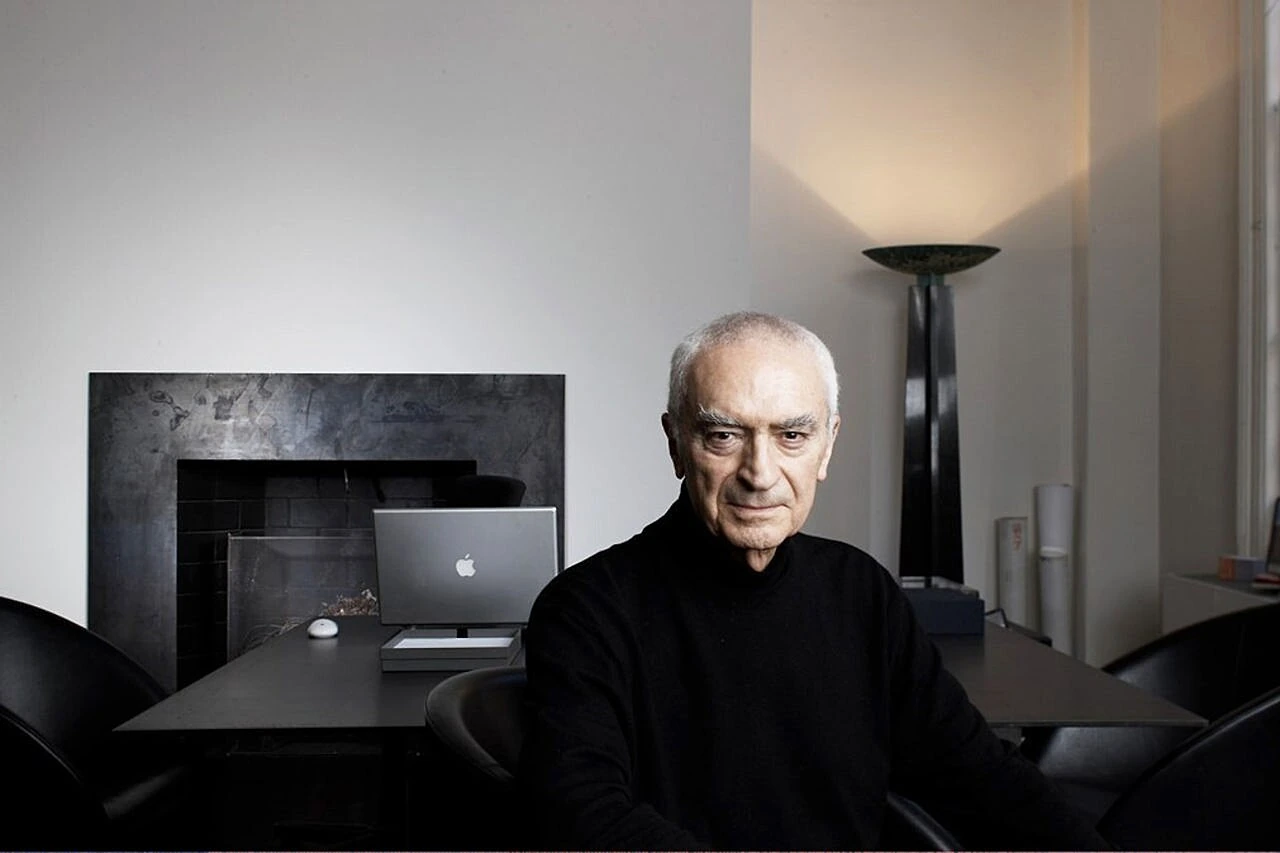
Massimo Vignelli (January 10, 1931 – May 27, 2014) was an Italian-American designer whose influence touched almost every corner of visual culture: graphic design, industrial design, furniture, packaging, and architecture. He was born in Milan, trained as an architect in Milan and Venice between 1950 and 1953, and eventually co-founded Vignelli Associates in New York City with his wife and partner Lella Vignelli in 1971, running it until his death at age 83 at his Manhattan home.
Wallpaper also discusses the Vignelli career and professional practice, including milestone-like information such as the transition from Unimark to Vignelli Associates (founded in 1971). His most recognized work includes the 1972 New York City subway map and signage system, corporate identity programs for American Airlines and IBM, and furniture lines for Knoll.
He received the Compasso d'Oro, the AIGA Gold Medal, and a string of other major design honors.
People search his net worth for a few reasons. Massimo Vignelli is a prominent name in design, so the phrase “massimo vitali net worth” often shows up in searches, even when sources can mix up different people. Design historians and students want a sense of how the profession pays at its highest levels. General curiosity followers connect his name to iconic American visual culture and wonder what that kind of legacy translates to financially.
And some searches happen because his name is close to others: there are identity-confusion risks when searching 'Massimo' paired with 'net worth,' since aggregator sites sometimes surface profiles for other individuals entirely. This article is specifically about the graphic and industrial designer behind Vignelli Associates, not anyone else.
The headline estimate: what we think his net worth was
The $5 million to $10 million range is a credible working estimate. Some third-party aggregator pages place him higher, but those figures tend to recycle without documented financial evidence, and I'd treat them skeptically. If you’re looking for Massimo Vian net worth comparisons, it’s best to stick to documented sources rather than recycled estimates. A few speculative net-worth sites have published numbers in that general range, but none cite estate filings, probate records, or verified asset inventories.
At the lower end of the range, you get a figure consistent with a successful privately held design firm owner in Manhattan who lived a comfortable but not extravagant professional life. At the upper end, you account for decades of high-profile commissions, possible ongoing licensing income, and Manhattan real estate held over a long career.
One important context point: in 2008, Massimo and Lella Vignelli donated their entire archive of design work to Rochester Institute of Technology, which used it as the foundation for the Vignelli Center for Design Studies. That donation transferred a substantial body of original materials and finished work to an educational institution rather than selling it privately. This means a significant non-cash asset left personal ownership before his death, which affects how any late-career net worth estimate should be read.
How we build a net worth estimate for someone like Vignelli

Net worth methodology for a privately held design professional differs considerably from how you'd approach a film star or tech CEO. There are no public earnings disclosures, no SEC filings, and no salary databases. Instead, the approach layers several types of evidence together: documented career history and firm structure, known client relationships and the scale of commissions those clients typically pay, academic and oral history records, secondary-market indicators, and any public record of asset transfers or donations.
For Vignelli specifically, the most useful primary sources include blank" rel="noopener noreferrer">the Smithsonian Archives of American Art oral history interview conducted in June 2011, which covers his career development, client work, and the structure of Vignelli Associates in considerable detail. RIT's documentation of the archive donation provides a concrete record of a significant asset transfer. Knoll's memorial materials confirm the furniture design relationships. Obituaries from the Los Angeles Times, Architectural Record, Archinect, and Phaidon provide corroborating career context. None of these sources discloses a dollar figure, but together they let you construct a plausible income and asset model.
What you cannot do is treat any single aggregator number as authoritative. Pages that claim a precise net worth for Vignelli without citing an estate record, probate filing, or verified financial disclosure are presenting estimates at best and recycled speculation at worst. This site's approach is to be explicit about that gap rather than paper over it with a confident-sounding round number. If you are specifically looking for vitil i Godonooga net worth, this article's approach helps explain why numbers online can be inconsistent without primary financial records vitali godonooga net worth.
Where his money came from: the main earning categories
Design commissions and corporate identity work

The core of Vignelli's income over roughly five decades was design commissions, primarily through Vignelli Associates (1971–2014) and before that through Unimark International, where he was a co-founder in the mid-1960s. Major clients documented in public sources include the New York Metropolitan Transportation Authority (the subway map and signage system), American Airlines, IBM, Bloomingdale's, and Knoll. Fees for corporate identity programs of that scale, particularly in the 1970s through 1990s, ranged from hundreds of thousands to several million dollars per engagement for a firm of Vignelli Associates' stature. Extrapolated over a career spanning more than 50 years, cumulative commission income alone would plausibly reach the low millions.
Furniture design and brand royalties
Vignelli's relationship with Knoll and other manufacturers meant that furniture designs could generate ongoing royalty income rather than a single fee. Furniture royalty structures in the design industry typically pay designers a percentage of net sales, often in the range of 3 to 8 percent, for as long as a piece remains in production. Some of his work remained in production for decades. The scale of those royalty streams is not publicly documented, but for a designer with multiple long-running pieces through a major manufacturer, the cumulative figure over 30 or 40 years would be meaningful, likely in the hundreds of thousands to low millions range.
Teaching, lectures, and publications
Vignelli taught and lectured extensively throughout his career. Academic positions and visiting lectureships in design typically pay modestly compared to commission work, but they add up over time and often come with additional opportunities: speaking fees, workshop honoraria, and publication advances. RIT Press published a scholarly biography titled 'Lella and Massimo Vignelli: Two Lives, One Vision,' and Vignelli himself authored or co-authored design books and manifestos. Publication advances and royalties in academic design publishing are generally not large, but they represent additional income layers and, more importantly, sustained his public profile in ways that supported ongoing commission work.
Secondary market and collectibles (indirect)
Signed Vignelli-designed prints, subway diagram certificates, and original pieces circulate in secondary markets. There's documented collector interest, including signed NYC subway diagram items that surface in online communities. A Reddit user on r/nycrail shared a signed Massimo Vignelli-designed NYC Subway Diagram certificate of authenticity, which illustrates how these signed ephemera circulate in secondary markets signed NYC subway diagram items that surface in online communities. However, secondary-market sales of work associated with a designer generally benefit estate holders or previous owners of those objects, not the designer directly during their lifetime. This factor is a proxy for cultural and brand value rather than a direct income source, and it tells us more about his legacy than his personal balance sheet.
Assets, lifestyle, and what can't be known
What we can say with confidence is that Vignelli lived and worked in Manhattan for decades, which implies substantial real estate costs (and potentially holdings) in one of the most expensive property markets in the world. His firm operated continuously from 1971 to 2014, suggesting stable operating income throughout. He received major honors that carry monetary awards in some cases (the Compasso d'Oro, for instance, carries prestige rather than large cash prizes). The 2008 archive donation to RIT transferred a body of original work whose replacement value or market value was never publicly appraised in available sources.
What cannot be known from public sources: the terms of any Manhattan property ownership (whether Vignelli rented or owned, and at what value), the specific financial structure of Vignelli Associates as a private firm, the terms of any royalty agreements with Knoll or other manufacturers, any investment or savings portfolio, and the terms of his estate distribution. Italian-American family and estate matters are private legal records, and none of the obituaries or institutional tributes include estate valuations. This is a genuine gap, not a detail that was missed. Any site claiming to have precise figures beyond the range above should be asked to show their source.
A timeline of financially relevant milestones
| Year | Milestone | Financial Relevance |
|---|---|---|
| 1931 | Born in Milan | Career baseline |
| 1950–1953 | Architectural training in Milan and Venice | Formed design foundation; no earnings |
| Mid-1960s | Co-founded Unimark International | First major firm-level income; large corporate clients |
| 1971 | Founded Vignelli Associates in New York with Lella Vignelli | Established primary income vehicle for 43 years |
| 1972 | Designed New York City subway map and signage system | High-profile commission; long-term brand value driver |
| 1970s–1990s | Corporate identity programs for American Airlines, IBM, Bloomingdale's, and others | Core commission income; multiple multi-year engagements |
| Ongoing | Furniture designs produced by Knoll and other manufacturers | Royalty income stream; duration-dependent |
| 1983 | AIGA Gold Medal | Career recognition; no large cash component |
| 1998 | Compasso d'Oro (career award) | Prestige recognition; modest or no direct financial award |
| 2008 | Donated entire archive to Rochester Institute of Technology | Major non-cash asset transferred; removed from personal estate |
| 2014 | RIT Press publishes 'Lella and Massimo Vignelli: Two Lives, One Vision' | Publication-related income; primarily legacy documentation |
| May 27, 2014 | Died at home in Manhattan, age 83 | Estate closed; no public probate figures available |
How to check this estimate and why numbers vary across sites

If you want to pressure-test the $5 million to $10 million estimate, here's what to look for. Start with the Smithsonian Archives of American Art oral history transcript from 2011, which is publicly downloadable and gives the most detailed first-person account of his career structure and client history. RIT's Vignelli Center for Design Studies documentation confirms the archive donation and its scope. Knoll's memorial materials confirm the manufacturing relationship. Architectural Record, the Los Angeles Times, and Phaidon obituaries provide corroborating career context without financial speculation.
Numbers vary across websites for predictable reasons. Many net-worth aggregator sites use a formula that multiplies estimated annual income by years of career activity and adds a rough asset multiplier. Different sites use different career income assumptions and different multipliers, producing a range of outputs from the same thin underlying data. Some sites also conflate different individuals with similar names, as illustrated by the fact that searches for 'Massimo net worth' can surface profiles for entirely different people. Always confirm you're reading about Massimo Vignelli (1931–2014, designer, Vignelli Associates, Manhattan) before trusting any figure you find.
Estate documentation for private individuals sometimes enters the public record through probate filings, which vary by state and are not always easily searchable. New York State surrogate court records are technically public but require knowing the case number or filing details. If new documentation surfaces from estate proceedings, from the Vignelli Center's archival research, or from future biographies drawing on private records, the estimate above could shift meaningfully in either direction. That's the honest state of the research as of mid-2026.
For readers curious about net worth profiles of other designers and creative professionals in this space, comparable research challenges come up with figures like Massimo Vitali (the photographer) and others whose careers were built through studio practice rather than public-company compensation. Massimo Vitali's net worth is often discussed online, but it still depends on reliable sourcing rather than recycled estimates. The methodology questions are similar even when the specific numbers differ.
Bottom line on the estimate
Massimo Vignelli built his wealth through one of the most productive careers in 20th-century design: five-plus decades of major corporate commissions, sustained furniture royalties, a globally recognized body of work, and a New York-based firm that operated for 43 years. If you want a quick starting point for the Marcel Vigneron net worth topic, compare how these numbers are derived and what sources they cite Massimo Vignelli built his wealth.
A net worth in the $5 million to $10 million range at the time of his death is a reasonable, evidence-informed estimate. It is not a confirmed figure. No public estate record establishes it, and the 2008 archive donation to RIT removed a significant body of assets from personal ownership before the question could be answered definitively. Treat any more precise number you see elsewhere with appropriate skepticism unless it cites a verifiable primary source.
FAQ
What would count as the strongest evidence behind a specific claim of “Massimo Vignelli net worth $X”?
Look for a citation to probate, surrogate court filings, or an estate inventory, not just an “income model.” For New York residents, probate paperwork can be hard to find without a case number, so the absence of those documents is one reason most online figures stay in a wide range.
How does the 2008 archive donation to RIT affect estimates of Massimo Vignelli net worth?
For privately held studios, net worth estimates are often inflated by assuming the designer still owns what later appears in the market. In Vignelli’s case, the 2008 donation to RIT suggests some valuable original materials were transferred before his death, which can lower what an estate-based estimate would otherwise include.
How can I tell if an online “Massimo Vignelli net worth” figure is really about the designer (not someone else with a similar name)?
Yes. Some sites mistakenly merge or swap individuals with similar first names or different designers altogether. A practical check is to confirm the profile includes the subway map/signage system, Vignelli Associates (founded 1971), and the 1931 to 2014 lifespan.
Why do royalty and licensing claims online often seem too specific for a private designer’s net worth?
Royalty-related income is usually ongoing and contract-dependent, but it is rarely publicly itemized. If a net-worth page gives you a precise royalty number without describing the agreement structure (rate, duration, and which products stayed in production), treat it as speculative.
Do sales of Vignelli-designed subway diagrams and signed prints contribute to Massimo Vignelli net worth estimates?
An important distinction is that secondary-market sales do not automatically translate into the designer receiving money after death. For signed prints and diagram items, collectors may profit, while proceeds typically go to estate holders or prior owners, not the designer’s estate unless it was structured that way.
What is a practical way to “audit” a net worth estimate without over-trusting aggregator sites?
If you want to stress-test the $5 million to $10 million range, test each income layer separately: commission income over decades, potential furniture royalty duration, teaching/speaking income, and any remaining assets at death. Then ask whether any precise alternative number explains all these layers with verifiable records.
Why can’t we assume Massimo Vignelli net worth is higher just because he lived in Manhattan for decades?
A lot of estimates implicitly assume home ownership at Manhattan market values. But without documented property records that show whether he owned the residence, his share, and purchase or appraisal dates, you cannot confidently convert “Manhattan life” into an asset number.
How could future probate, archival findings, or new biographies change the estimate?
If new probate or archival research becomes public, the estimate could move in either direction, but likely not to an entirely different order of magnitude unless it reveals major liquid assets or sizable retained investments. The bigger adjustment is usually whether key assets were already transferred, donated, or held through a private entity.