
Frédéric Vasseur's net worth is credibly estimated in the range of $10 million to $30 million USD as of mid-2026, with the most reasonable central estimate sitting around $15 to $20 million. That range is wide by design: Vasseur is a senior executive in a private-ish motorsport world where compensation packages are not publicly filed, ownership stakes in his earlier ventures are not fully documented, and the line between his personal wealth and the corporate structures he has led is genuinely blurry. What we can say with confidence is that his career arc, from running his own racing team to becoming CEO of Sauber Motorsport to leading Scuderia Ferrari as Team Principal and General Manager, represents the kind of trajectory where serious wealth accumulates, even if the exact number stays out of public view.
Frederic Vasseur Net Worth Estimate and How It’s Calculated

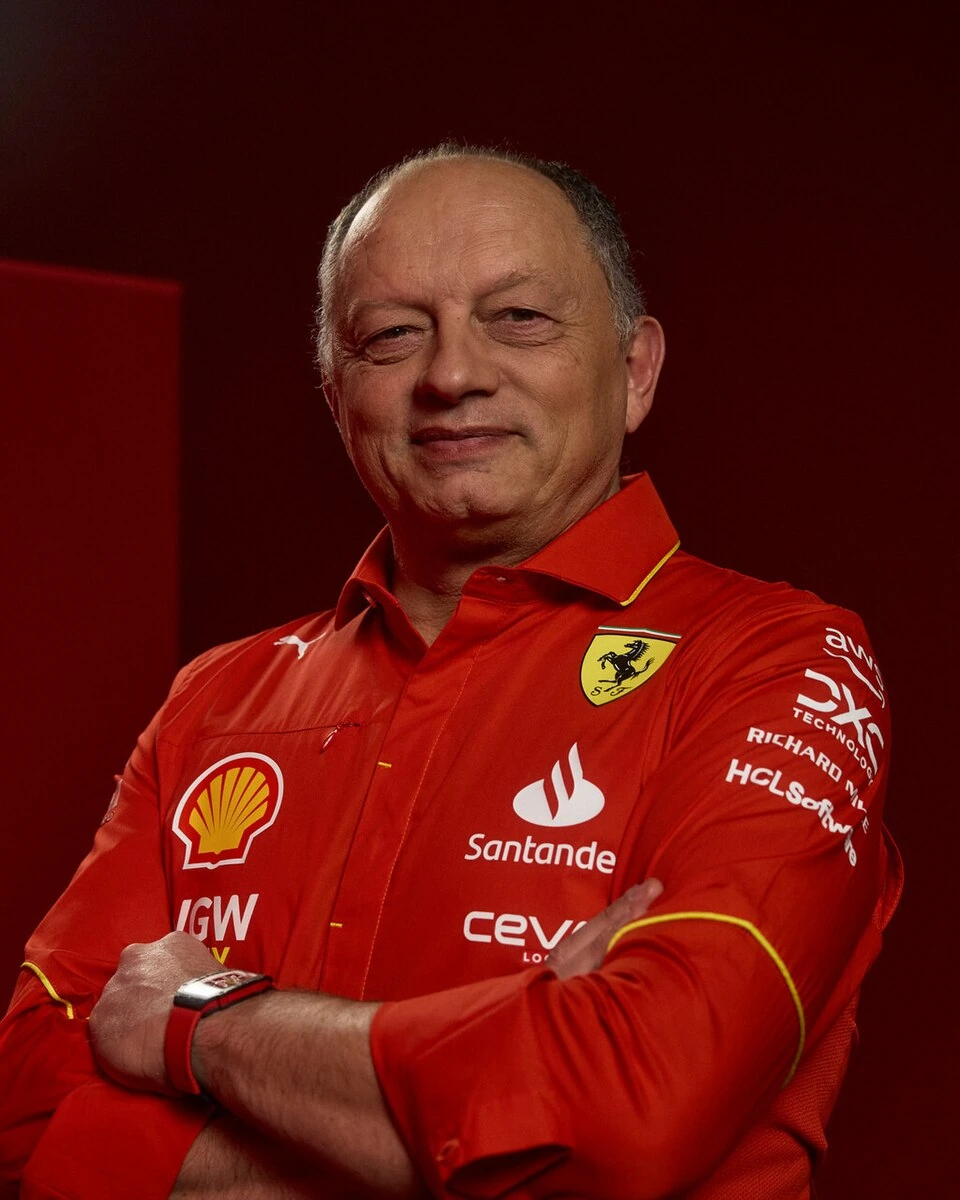
Who Frédéric Vasseur is
Frédéric Jean Henri Vasseur was born on 28 May 1968 in Draveil, France. He is a motorsport executive and engineer who built his career from the ground up in single-seater racing before becoming one of the most prominent team principals in Formula 1. His public profile is almost entirely professional, which makes researching his personal finances genuinely challenging.
The career story matters here because it shapes where his wealth likely comes from. Vasseur co-founded ART Grand Prix (originally ASM) in 1997, a feeder-series racing team that became one of the most successful in GP2 and Formula 3. That team produced and managed future F1 world champions and earned a strong reputation as a driver development powerhouse. Founding and operating a successful racing team for roughly two decades is a meaningful wealth-building event, particularly if he retained equity through any eventual sale or restructuring.
He entered Formula 1 proper in 2016 as Team Principal of the Renault F1 Team, then moved in 2017 to take the role of Managing Director of the Sauber Group and Team Principal of the Sauber/Alfa Romeo team. blank" rel="noopener noreferrer">Ferrari confirmed in early January 2023 that Vasseur would join Scuderia Ferrari as Team Principal and General Manager. Ferrari N.V. then renewed his contract in a corporate release dated July 31, 2025, confirming his ongoing tenure through the current 2026 season and beyond. That renewal matters for net worth estimation because it signals continued access to a senior executive compensation package at one of the world's most commercially valuable sporting entities.
The net worth estimate, broken down

Breaking the estimate into its component parts makes it more useful. There are three main buckets: compensation from employed roles, equity or proceeds from his earlier team ownership, and any personal investments or assets that sit outside his motorsport career.
Salary and executive compensation
Ferrari does not publish individual executive compensation for its sporting division in the same granular way a U. S. public company might file executive pay in proxy statements. What we do know from comparable roles is that F1 team principals at top constructors are compensated at a level consistent with senior sports executives, typically somewhere in the range of $2 million to $8 million per year depending on tenure, performance bonuses, and contract structure.
Vasseur has now been in F1 team principal roles continuously since 2016, with the Ferrari role representing the peak of that salary arc. Over ten-plus years in high-level F1 executive positions, accumulated compensation alone could plausibly land in the $15 to $40 million range before taxes, lifestyle costs, and savings assumptions.
Equity and team ownership

ART Grand Prix is where the ownership question gets interesting and where the estimate becomes genuinely uncertain. Vasseur co-founded the team and was closely associated with it for many years. Whether he retained equity into a sale or partnership event, and at what valuation, is not publicly documented. Junior motorsport teams do not typically generate Ferrari-level revenues, but a well-run operation with consistent championship results and strong commercial relationships can carry real enterprise value. If he exited with a meaningful equity stake, that could represent a lump-sum contribution to his net worth. If he was largely a managing partner without a major equity exit, the contribution is smaller. This is the biggest single variable in any estimate.
Other assets and investments
Vasseur has maintained a relatively low personal profile outside motorsport. There is no credible public reporting on real estate holdings, investment portfolios, or business interests outside his racing career. That does not mean they do not exist, but it means any estimate that adds a large number for private investments is speculating without a factual basis. The honest position is to treat this bucket as unknown and not add to the estimate based on assumption alone. This approach also helps explain why estimates for Stephan Vigier net worth can vary so widely across different sites.
The honest range
| Wealth Component | Estimated Range | Confidence Level |
|---|---|---|
| Accumulated executive compensation (F1 roles, 2016-2026) | $8M – $20M | Moderate – based on comparable role benchmarks |
| ART Grand Prix equity or proceeds | $0 – $10M | Low – ownership structure and exits not publicly documented |
| Other investments and assets | Unknown | Very low – no credible public reporting |
| Total estimated net worth | $10M – $30M | Moderate – central estimate around $15M–$20M |
Where to look for better data

No single source gives you a verified Vasseur net worth figure, but several categories of sources can help you triangulate.
- Ferrari N.V. investor filings: Ferrari is publicly listed (NYSE: RACE) and files annual reports and earnings releases that include some executive compensation disclosure. These are worth checking, though they typically cover listed senior executives under Italian and Dutch corporate governance rules rather than sporting division team principals specifically.
- Companies House or equivalent European filings: If Vasseur holds or held directorships in UK or European-registered entities (relevant for his Sauber/Alfa Romeo tenure), corporate registries may show equity percentages or historical appointments.
- ART Grand Prix corporate structure: Searching French and European company registries for historical ownership records tied to ASM or ART Grand Prix can surface whether Vasseur held equity and through what legal structure.
- Credible motorsport trade press: Publications like Autosport, Motorsport.com, and RaceFans have published profile pieces that occasionally include compensation context or ownership background. These are not primary sources but often synthesize available information responsibly.
- Official Ferrari communications: The Ferrari.com biography page and press releases (including the July 2025 contract renewal announcement) confirm tenure and role scope, which feed into compensation benchmarking.
- Verified financial data aggregators: Sites that aggregate executive pay data using disclosed filings can provide salary context for comparable roles at public sports and entertainment companies.
How this kind of estimate gets built
Net worth estimates for private individuals in public-facing roles are built through a process of triangulation rather than direct access to bank statements or tax filings. The methodology here follows a few consistent steps: establish career milestones and the compensation benchmarks attached to comparable roles, identify any documented equity events (team sales, co-founding stakes, public company grants), subtract reasonable assumptions for taxes and lifestyle in the relevant geography, and then flag every assumption that cannot be confirmed with a source.
The reason credible sites disagree on figures like this is almost always one of three things: they use different salary benchmarks, they include or exclude the equity component based on incomplete information, or they anchor to an outdated estimate and roll it forward without updating for new career developments. Sites that publish a precise single figure like $12 million or $25 million without explaining their methodology are typically picking a number that feels plausible rather than one built from documented components. That is why ranges with explicit uncertainty markers are more honest and more useful than false precision.
Career milestones and when wealth likely grew

Looking at the timeline helps readers understand when meaningful wealth accumulation events likely occurred, rather than treating net worth as a static number.
- 1997: Co-founds ASM (later ART Grand Prix). Early-stage team building, likely limited personal liquidity but equity interest established.
- Late 1990s–early 2010s: ART Grand Prix grows into a dominant feeder series operation. Revenue and team value build over this period. Vasseur's personal wealth tied closely to the team's performance and any profit distributions.
- 2016: Joins Renault F1 as Team Principal. First direct exposure to a top-level F1 salary structure with a major manufacturer. This likely represents a significant step up in annual compensation.
- 2017: Takes on CEO and Team Principal role at Sauber Group. Senior executive title at a F1 constructor, with commensurate pay package and potentially more contractual security.
- January 9, 2023: Officially joins Scuderia Ferrari as Team Principal and General Manager. Ferrari is one of the highest-profile and commercially valuable teams in motorsport. This appointment almost certainly represents the highest-compensation role of his career.
- July 31, 2025: Ferrari N.V. announces contract renewal, confirming Vasseur's continued senior role through the 2026 season and signaling further compensation accumulation.
Salary, ownership, and investments are not the same thing
One of the most common errors in celebrity and executive net worth coverage is treating salary as equivalent to net worth. They are not. A person earning $5 million per year for ten years has not necessarily accumulated $50 million in net worth. Taxes, living costs, and how savings are deployed all matter. For Vasseur specifically, the key distinction is between his role as a salaried executive at Ferrari (and previously at Renault and Sauber) versus any residual equity or proceeds from his earlier role as a team founder at ART Grand Prix.
The salary side is more predictable and benchmarkable. The equity side is where estimates can swing dramatically depending on assumptions. If ART Grand Prix was sold or recapitalized at a valuation that included a meaningful payout to Vasseur, his net worth sits at the higher end of the range. If his departure from that team was structured without a major equity exit, the lower end is more defensible. Without documented evidence of a transaction, both scenarios remain live.
It is also worth noting that colleagues and peers in the motorsport executive world, such as other team principals and senior figures at competing constructors, often accumulate wealth through a mix of high salaries and long-term incentive arrangements rather than through traditional entrepreneurial exits. Vasseur's path is somewhat unusual in that he did both: he founded and ran a team, then transitioned into employed executive roles at major F1 organizations. That dual path is part of why his wealth profile is interesting and why simple comparisons to pure team principal salary benchmarks may understate his total net worth.
How to keep this estimate current
Net worth estimates for figures like Vasseur should be treated as living documents rather than permanent conclusions. Here is how to revisit and refine the estimate as new information emerges.
- Check Ferrari N.V.'s annual report each year. The company files under Dutch corporate governance rules and the annual report is publicly available. Look for any disclosure of Team Principal compensation or changes to senior leadership pay structures.
- Monitor Ferrari press releases. The July 2025 contract renewal is a good example of an official communication that confirms tenure and implies ongoing compensation. Future renewals, restructuring announcements, or departures would all warrant an estimate update.
- Search European corporate registries. French (Infogreffe) and UK (Companies House) registries allow public searches of director appointments and equity stakes. If Vasseur holds or transitions out of any registered directorships, those filings can surface useful context.
- Track credible motorsport journalism. Outlets like Autosport, The Race, and Motorsport.com occasionally publish reporting on executive contracts and team finances. These are not primary sources but can flag events worth investigating further.
- Watch for ART Grand Prix ownership news. Any acquisition, partnership, or restructuring event at ART Grand Prix that names Vasseur as a party would be significant for the equity component of this estimate.
- Revisit comparable role benchmarks annually. The F1 executive compensation landscape shifts. If public reporting on peer team principal salaries updates, that feeds directly into the compensation component of this estimate.
The honest final note is that Frédéric Vasseur is exactly the kind of figure whose net worth is genuinely hard to pin down: high-profile enough to attract curiosity, private enough that key financial details stay out of public filings, and with a career complex enough that salary alone tells only part of the story.
If you are trying to reconcile this with claims about Frédéric Vasseur net worth, the same uncertainty that drives the $10 million to $30 million range will apply. The $10 million to $30 million range reflects that honest uncertainty. Anyone publishing a more precise number without sourcing is guessing.
Anyone interested in comparable motorsport executive wealth profiles may also find it useful to look at how figures in adjacent industries and roles are estimated, recognizing that the same methodological limitations apply across that whole category of wealth research. For a separate look specifically at Benjamin Vuchot’s net worth, you can use the same triangulation approach and compare documented career and equity milestones benjamin vuchot net worth. For a separate look at Benjamin Vuchot's net worth, you can use the same triangulation approach.
FAQ
Is Frederic Vasseur net worth closer to $10M or $30M, and what would push it higher?
It is usually anchored around a middle estimate, but the high end becomes more likely if you can document that he kept a sizable equity stake in ART Grand Prix through a sale, recapitalization, or profit-sharing event (or if there were other undisclosed business interests). Without an identifiable payout event, the equity bucket stays uncertain, which keeps the range wide.
Why can’t we verify Frederic Vasseur net worth the way we can for public executives?
Because his key roles are mostly with private or not fully disclosure-intensive structures, there are no consistent public filings that break out personal equity grants, option exercises, or exact compensation components. Net worth estimates therefore rely on salary benchmarks and inferred equity outcomes, not verified tax or asset disclosures.
Does a high annual salary automatically mean Frederic Vasseur net worth is proportionally high?
No. Net worth depends on after-tax savings, how much was spent on lifestyle, and whether compensation was paid as cash versus long-term incentives. A decade of large pay can still produce less net worth than simple multiplication if taxes and expenses are high and if incentives did not convert into liquid assets.
How much does the ART Grand Prix equity uncertainty affect Frederic Vasseur net worth estimates?
It is the largest swing factor. Small differences in assumed equity retention, the valuation at exit, or whether he received proceeds when he left can move estimates by tens of millions. That is why credible estimates treat the equity bucket as unknown until a documented transaction or stake detail appears.
If Ferrari renewed Frederic Vasseur’s contract, does that change his net worth immediately?
It can change the outlook for future earnings, but it does not directly confirm existing assets already accumulated. Net worth moves when compensation is earned, saved, and converted into holdings. A contract renewal is mainly a signal that salary or incentives continue at senior-executive levels, not proof of a specific increase in net worth today.
Do incentives and bonuses make Frederic Vasseur net worth harder to calculate?
Yes. Even if you have a rough range for base pay, F1 compensation often includes performance-based bonuses, deferred components, and contract-specific terms. Two executives with similar base salaries can have very different net worth outcomes depending on bonus triggers and how incentives are paid over time.
What common mistake should I avoid when reading Frederic Vasseur net worth claims online?
Avoid treating a single precise figure as fact when it is not backed by a clear methodology. Many sites publish a one-number estimate without explaining whether they included an equity exit, how they handled taxes, or whether the salary benchmark matches the specific role and time period.
How should I update my Frederic Vasseur net worth estimate when new information appears?
Re-run the model by (1) updating the most recent contract and tenure for the salary benchmark, (2) checking whether any documented ART Grand Prix transaction or stake detail emerges, and (3) adjusting the assumptions for taxes and lifestyle using the relevant residence and time period. Then widen the range if evidence is still missing rather than forcing a single-point number.
Could private investments or real estate exist, and if so, should they be included in Frederic Vasseur net worth estimates?
They could exist, but the article approach treats that bucket as unverified. A practical rule is to include only investment categories when there is credible reporting, such as ownership disclosures or documented purchases, otherwise you risk inflating net worth with speculation.