
Rudolph Valentino's estate, as documented in California probate records, was appraised at roughly $488,000 in gross assets across two inventory filings made in 1927 and 1928. After accounting for debts and creditor claims (contemporary press put his liabilities at anywhere from £33,000 to $50,000 or more owed to specific parties), a reasonable best-estimate net worth at his death on August 23, 1926 falls somewhere in the range of $250,000 to $350,000. That's in 1926 dollars, which translates to roughly $4.5 million to $6.3 million in 2026 purchasing power. Confidence on that range is moderate at best: the probate appraisals came months after death, creditor claims were settled over years, and the estate had complex trust and business components that don't reduce cleanly to a single liquid figure.
Rudolph Valentino Net Worth at Death: Best Estimate

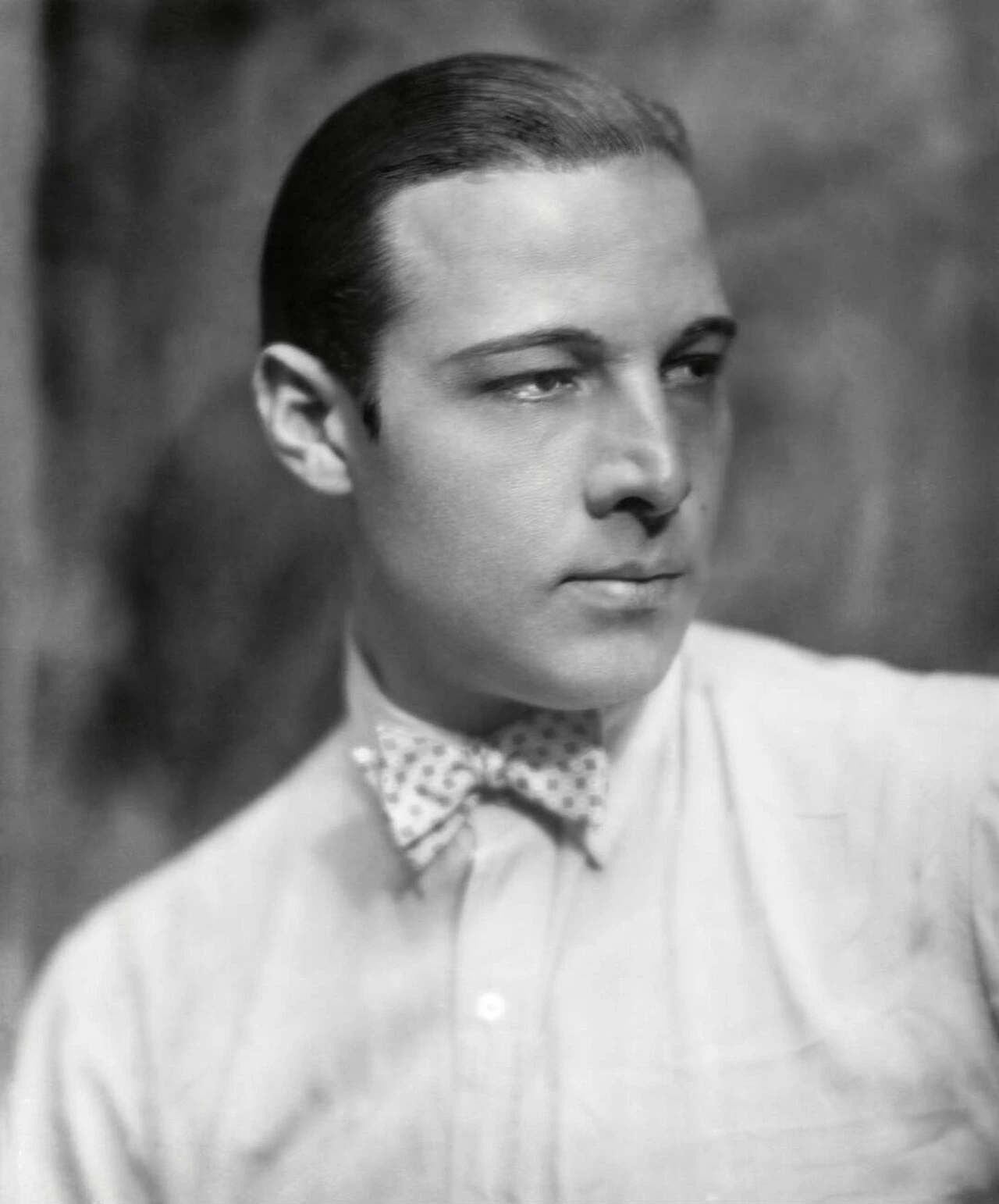
Who Valentino was financially
Valentino was the biggest male box-office draw in Hollywood during the early 1920s, but his financial life was considerably messier than his star power suggests. At his peak, he was pulling in around $200,000 per picture plus a 25% share of profits on major productions, according to contemporaneous reporting from August 1926. That's serious money for the era. The problem was that Valentino was, by multiple accounts from people close to him, a genuinely poor manager of his own finances. He spent lavishly on his estate Falcon Lair, on cars, antiques, and an extravagant personal lifestyle, and he went through extended periods of contract disputes and industry blacklisting that interrupted his income. His career only spanned roughly six years of real stardom (1921 to 1926), and he died at 31, so the wealth-accumulation window was shorter than it might appear.
His final contract, with United Artists, gave him better terms than earlier deals, but he died before completing the full benefit of that arrangement. The point is that knowing his per-picture income doesn't tell you much about his net worth at death without also understanding what he owed and what remained liquid. Income and net worth are different numbers, and for Valentino the gap between them was significant.
What 'net worth at death' actually means for his estate

When someone dies, their estate goes through a probate process that catalogs assets and resolves liabilities before anything passes to heirs. For Valentino, that process was long and complicated. S. George Ullman was appointed executor on October 13, 1926, roughly seven weeks after Valentino died. A formal inventory and appraisal of the estate was filed April 13, 1927, showing real and personal property totaling $244,033.15. A supplementary inventory followed on January 9, 1928, adding another $244,550 in assets, bringing the documented gross estate to just over $488,000. Ullman didn't resign as executor until June 7, 1930, and probate wasn't fully resolved until an August 8, 1932 decree, after years of creditor claims, litigation, and supplemental accounting.
That timeline matters because 'net worth at death' is not the same thing as the estate's value at the end of administration. Assets discovered or appraised later, debts paid or barred by creditor deadlines, business interests managed under a trust structure, and proceeds from estate auctions (a public auction of his belongings began December 10, 1926) all change the picture depending on which moment you freeze. The gross inventoried value of roughly $488,000 is the most defensible anchor for discussions of his death-date financial position, but it's a gross figure. Subtracting liabilities is where the estimates start to diverge.
The will also included directions to perpetuate Valentino's name in the picture industry, which created an ongoing business trust component. That kind of asset doesn't have a clean market value the way a bank account does. It complicates any attempt to state his 'net worth' as a single number because part of the estate was being managed as an operating concern rather than simply liquidated.
The sources and methodology behind the estimate
The most reliable anchor for any Valentino net-worth estimate is the 1934 California Court of Appeal opinion in In re: Guglielmi's Estate, which is publicly accessible via FindLaw and through the California Judicial Branch's appellate case information system. That opinion lays out the probate chronology in detail, including the inventory figures from 1927 and 1928. It also notes that the court characterized the estate as growing from about $300,000 at death to approximately $1,000,000 under administration, which reflects the difference between death-date valuation and the value accumulated through estate management and income.
Contemporary newspaper reporting supplements the court record on the liability side. A 1930 item in New Zealand's Marlborough Express (preserved in the Papers Past archive) stated Valentino died £33,000 in debt. Separate press reporting from September 1926 identified a specific debt of $50,000 owed to producer Joseph Schenck. These are press figures, not probate schedules, so they carry less evidential weight than the court filings. But they're consistent with the general picture of an estate that had real liabilities to resolve before anything passed to heirs.
The estate auction catalog, 'Catalogue of the Estate of Rudolph Valentino: To be Sold at Public Auction Commencing December 10th, 1926,' is available via Google Books and corroborates the executor's role and provides a window into the physical assets being liquidated. Cross-referencing auction items against inventory appraisals is one way to check whether reported valuations were realistic.
The methodology here is straightforward: start with the documented gross inventory ($488,000+), subtract identified liabilities (partially documented through press reporting and the appellate opinion's reference to creditor resolution), acknowledge that the liabilities schedule from the original probate filing is not fully accessible through secondary sources, and express the result as a range rather than a precise figure. The honest answer is that the underlying creditor schedule from the original Los Angeles Superior Court probate file has not been fully digitized or widely published, which is the main constraint on precision.
Why online net-worth numbers conflict so much

If you've been searching around before landing here, you've probably seen figures ranging from under $100,000 to several million dollars. Here's why those numbers don't agree.
- Gross vs. net confusion: Many sources cite the gross inventoried estate value (around $488,000) without subtracting debts, which overstates actual net worth.
- Timing differences: Some sources use the $300,000 figure cited in the 1934 appellate opinion as a characterization of death-date value, while others use the full $488,000 inventory compiled over two filings made 5 to 17 months after death.
- Inflation conversion choices: Sites that convert to modern dollars use different base years and different inflation indices, which can double or halve the modern equivalent depending on assumptions.
- Estate administration value vs. death-date value: The 1934 court noted the estate grew to roughly $1,000,000 under administration. Some sources report that figure as his 'net worth,' which conflates post-death earnings and asset appreciation with what he actually had when he died.
- Press reporting treated as primary data: The debt figures from newspaper accounts in 1926 and 1930 are sometimes taken at face value and sometimes ignored, leading to wildly different net figures depending on whether liabilities are applied.
- Trust and business asset valuation: The portion of the estate held in trust for ongoing use of his name and likeness in the film industry had no clear market value and was appraised differently depending on the methodology used.
The most common error is treating a probate inventory value as equivalent to 'net worth.' An inventory lists what's there; net worth requires subtracting what's owed. For an estate with Valentino's level of documented debt, that distinction matters a lot.
Key evidence from the estate and probate record
| Source | Figure / Finding | Reliability |
|---|---|---|
| In re: Guglielmi's Estate (1934 CA Court of Appeal) | Inventory 1 (April 13, 1927): $244,033.15 in real and personal property | High — primary legal record |
| In re: Guglielmi's Estate (1934 CA Court of Appeal) | Supplementary inventory (Jan 9, 1928): additional $244,550; gross total ~$488,583 | High — primary legal record |
| In re: Guglielmi's Estate (1934 CA Court of Appeal) | Appellate court characterizes estate value at death as ~$300,000, growing to ~$1,000,000 under administration | High as characterization; note this is the court's own summary, not the raw inventory |
| Marlborough Express (Oct 25, 1930), via Papers Past | Valentino died £33,000 in debt (approx. $160,000 at 1926 exchange rates) | Moderate — contemporary press, not probate document |
| Press report, Sept 8, 1926 | $50,000 owed specifically to Joseph Schenck | Moderate — named creditor, but sourced from newspaper not court filing |
| Estate auction catalog (Dec 10, 1926) | Personal property being auctioned shortly after death, corroborates executor role and asset scope | Moderate-High — contemporaneous primary document |
| 1934 appellate opinion (procedural history) | All creditor claims paid, settled, or barred before final accounts filed; decree issued Aug 8, 1932 | High — confirms liabilities were resolved but does not itemize amounts |
Taking those data points together: a gross estate of roughly $488,000, a debt load somewhere in the range of $100,000 to $200,000 based on press reporting (with the caveat that press figures are not the probate creditor schedule), and a net estate in the neighborhood of $250,000 to $350,000 at or near the date of death. That range should be treated as an informed estimate, not a precise figure.
How to verify and refine this number yourself

If you want to go deeper than any secondary source, including this one, there are concrete next steps. The original probate case file for Valentino's estate would have been filed in Los Angeles Superior Court under his legal name Rodolfo Alfonso Raffaello Piero Filiberto Guglielmi di Valentina d'Antonguolla (the estate appellate case name, In re: Guglielmi's Estate, is your search anchor). Older Los Angeles Superior Court probate indexes are held in county archives, and the Los Angeles County Superior Court's probate division can direct you to the right archive or records request process. For probate case-file access in Los Angeles County, the Los Angeles Superior Court's Probate Division also describes where older probate indexes and related materials were kept and how to locate probate records where older probate indexes and probate records were kept.
- Read the full 1934 appellate opinion (In re: Guglielmi's Estate) on FindLaw or via the California Judicial Branch's appellate case information system. It's the richest single source for probate chronology and inventory figures.
- Request the original probate case file from the Los Angeles Superior Court or Los Angeles County Archives. The file should contain the actual creditor schedules, inventory appraisals, and executor accounts that secondary sources only summarize.
- Cross-reference against the estate auction catalog (available on Google Books) to check whether personal property valuations in the inventory align with what was actually sold.
- When evaluating any online net-worth figure for Valentino, ask whether it is a gross inventory value or a net-after-liabilities figure, and whether debts documented in press reporting have been applied.
- For inflation conversion, use a consistent, documented tool (such as the CPI calculator at the U.S. Bureau of Labor Statistics website) and be explicit about which year you are converting from and to. This alone accounts for a large portion of the variation you will see across different sites.
- Be skeptical of any figure presented without a source. The most common Valentino net-worth figures circulating online trace back to the 1934 appellate opinion or to press accounts from 1926 to 1930, and many sites do not distinguish between them.
One practical note: the 1934 appellate opinion is freely accessible and covers the most important financial facts. If you're doing casual research, reading that opinion carefully will give you more reliable information than most dedicated 'net worth' pages. If you're doing archival research, the Los Angeles County probate records are the authoritative primary source and are worth the effort to access directly.
Putting it in context
Valentino's financial story is a genuinely interesting one precisely because the numbers don't match the legend. He was the biggest male star in the world at his death, earning what would be millions in today's terms per film, and yet his estate was modest and debt-laden by the standards of his fame. If you're trying to pin down a modern "david valentino net worth" number, the best place to start is the same probate-based approach discussed in this article. That gap between income and accumulated wealth is common enough among entertainers of any era, and it's part of what makes his financial profile worth understanding rather than just summarizing as a single number. If you're comparing him to other entertainers who share the Valentino name in other contexts, like Bobby Valentino or Tru Valentino, the generational and industry differences are significant enough that direct comparisons would be misleading. If you're looking for Bobby Valentino net worth, you will need to use information tied to his own biography and business history rather than Valentino's 1920s estate records. Rudolph Valentino's financial profile is firmly a product of early Hollywood's contract structures, personal spending habits, and a career cut short at 31.
The honest bottom line: approximately $250,000 to $350,000 net at death in 1926 dollars, based on documented probate inventory values minus partially documented liabilities. That's roughly $4.5 million to $6.3 million in 2026 dollars. The uncertainty is real, the primary records are accessible if you want to go verify it yourself, and any source that gives you a more precise number without citing those records should be treated with skepticism.
FAQ
Why do different websites claim radically different Rudolph Valentino net worth numbers?
It is best to use the death-date net worth estimate from the article (about $250,000 to $350,000 in 1926 dollars). Probate “gross estate” values (roughly $488,000 in the inventory) are not the same thing as net worth because they exclude creditor claims and other liabilities. If a source quotes a single figure, check whether it is gross inventory, death-date net value, or the estate’s value later in administration.
How can I tell whether a Valentino net worth figure is based on the right probate stage?
If you see an answer that ignores liabilities, subtracting them, or mixes death-date and later administration numbers, it is likely unreliable. Valentino’s probate process ran for years, and the estate management component (including trust-like arrangements) means the estate value could look larger over time even if the death-date net amount was modest.
Does converting 1926 dollars to 2026 dollars explain why numbers don’t match across sources?
Yes, a “modern dollars” conversion can shift results even if the underlying 1926 net figure is correct. The article uses purchasing power style conversions (ending up around $4.5 million to $6.3 million in 2026 buying power). If another site uses inflation-by-wages or GDP-share style methods, the dollar amount can diverge substantially even when the base estimate is similar.
Why is it hard to assign one exact net worth number to Valentino’s estate?
Valentino’s estate was not simply a bundle of cash and property that immediately liquidated. The article notes business and trust components tied to continuing his name in the film industry, which can be hard to value as a single market price. That is one reason even careful researchers still end up presenting a range rather than one precise net worth number.
Can the auction results help verify the probate inventory values?
Probate “inventory” listings are typically appraised, meaning values can be uncertain and sometimes reflect estimates rather than what items ultimately sold for at auction. The article also mentions a public auction of his belongings, which is a useful cross-check: if auction sale totals consistently diverge from inventory appraisals, that suggests appraisal uncertainty at the time.
Are newspaper debt figures enough to compute Valentino’s net worth?
Yes, but with caution. Press reports may cite specific debts (such as the $50,000 claim attributed to Joseph Schenck) and total debt figures (like the reported £33,000), but those are not the same as the creditor schedules filed in court. The most defensible approach is to treat press as directionally useful and rely on probate and the appellate opinion for the core structure of the financial picture.
If I only have time for one primary document, which one matters most for net worth at death?
If your goal is a reliable “at death” number, prioritize the appellate opinion described in the article (In re: Guglielmi's Estate) and any accessible probate inventory/appraisal figures tied to 1927 and 1928. Use other secondary sources only to help locate where the original creditor schedule might be found, because that is where precision most often breaks down.
Can I compare Rudolph Valentino’s net worth to other “Valentino” entertainers?
When you are comparing Valentino to other people with the surname “Valentino,” you should not assume shared wealth or inherited financial ties. The article explicitly warns that comparisons to other entertainers using “Valentino” (for example, different generations or unrelated individuals) can be misleading, because their assets and records come from different lives and business histories.
What should I do if I want to tighten the net worth range beyond the article’s estimate?
The most realistic expectation is a range, not a single value, because key supporting documents (especially the original detailed creditor schedule) are not fully digitized or widely reproduced in secondary sources. If you want to narrow the range, the practical next step is to obtain the Los Angeles Superior Court probate file materials and reconcile them against the inventory/appraisal totals and any creditor-by-creditor accounting.