
As of June 27, 2026, the most credible estimated net worth for Vittorio Cecchi Gori is somewhere between negative territory and a very modest positive figure, likely in the range of -€10 million to +€5 million at best. That wide, low range is not a cop-out: it reflects a documented history of corporate insolvencies totaling well over €600 million in liabilities, multiple criminal convictions tied to those collapses, and asset confiscations that stripped away what remained of a once-enormous media empire. Any website listing his net worth in the tens of millions without accounting for those liabilities is simply not doing the math.
Vittorio Cecchi Gori Net Worth Estimate and How It’s Built

Marcus Rothwell
27 Jun 2026
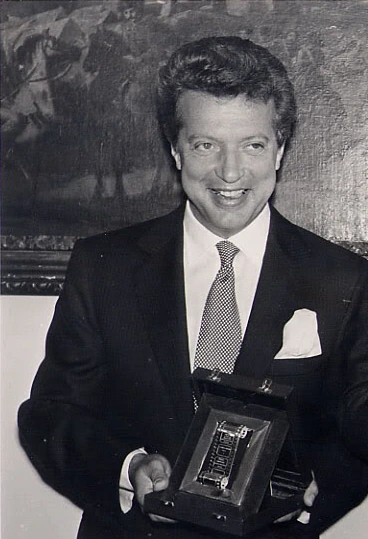
Who Vittorio Cecchi Gori is (and why the numbers get confusing)

Vittorio Cecchi Gori was born in Florence on 27 April 1942. He is an Italian film producer, media entrepreneur, and former politician, best known internationally for producing films that won major awards, including Il Postino (1994, Academy Award nominee for Best Picture) and Life Is Beautiful (1997, winner of three Oscars including Best Foreign Language Film). He also owned AC Fiorentina for a period, which ended badly, and served as a member of the Italian parliament.
One of the first things to clear up: Vittorio is regularly confused with his father, Mario Cecchi Gori, who built the original Cecchi Gori Group film empire before his death in 1993. Vittorio inherited the group's presidency that year and dramatically expanded it. They are two separate people with overlapping professional histories and connected legacies, and some online profiles mash their careers together.
Other figures with the first name Vittorio who operate in Italian culture and media, such as Vittorio Sgarbi, Vittorio Gassman, or Vittorio de Sica, are entirely unrelated to this particular net worth story. The Cecchi Gori name is also shared by other family members who remain connected to the Italian film business, so when reading any source, it is worth confirming it is specifically about Vittorio, not a sibling or other relative.
The reason net worth estimates for him vary so wildly across the internet comes down to a single problem: most sites do not account for liabilities. If you look only at the peak-period assets, the Cecchi Gori Group was an enormous enterprise spanning cinema production, television channels, music, and electronic publishing. But that same structure collapsed under more than €600 million in debt, was declared bankrupt through court proceedings, and resulted in multiple criminal convictions for Vittorio personally. A net worth estimate that ignores those outcomes is not an estimate of what he is worth; it is a description of what he once controlled.
Best available estimate as of June 27, 2026
Estimated net worth range: -€10 million to +€5 million (last updated June 27, 2026).
The honest upper bound of +€5 million accounts for the possibility that Vittorio retains some personal assets that were not seized or encumbered by bankruptcy proceedings or confiscation orders. He is 84 years old at the time of this writing, and there is no publicly documented evidence of a business recovery or new income stream of meaningful scale since the Finmavi and Safin insolvencies. The lower bound acknowledges that court-ordered confiscations and creditor claims may have left him in a net-negative personal financial position, even if many of those claims were technically directed at corporate entities rather than him personally.
This is a deliberately cautious estimate. No credible, clearly dated primary financial disclosure has emerged from public records or major Italian media that would support the higher figures, sometimes in the range of $50 million or more, that appear on some celebrity net worth aggregator sites. If you are comparing estimates like Jack Savoretti net worth, be sure they also reflect debts and verified, up-to-date sourcing. Those figures appear to be based on peak-period asset assumptions with no adjustment for the liabilities that followed. This estimate, by contrast, is anchored in the documented insolvency record.
What goes into the estimate (and what we deliberately leave out)

Building a credible net worth estimate for a figure like Vittorio Cecchi Gori requires being explicit about what is and is not counted. Here is the framework applied here.
What is included
- Documented corporate stakes and holdings at the time of insolvency proceedings, as reported in court filings, bankruptcy records, and credible Italian business journalism
- Known asset encumbrances such as the bond placed against the Cecchi Gori film library by creditor banks during the Finmavi bankruptcy proceedings
- Confiscation and seizure orders tied to criminal convictions, including reported sequestration of shares in entities such as Cecchi Gori Cinema e Spettacolo and Vip 1997
- Quantified liability figures from primary sources: the Finmavi passivo of approximately €600 million (cited in multiple outlets including La Repubblica and The Independent) and the Safin Cinematografica 'crac' of approximately €24 million (as reported by Il Sole 24 ORE and Corriere della Sera)
- Intercompany debt claims identified in US litigation, including approximately $47 million owed to Finmavi by Cecchi Gori Pictures and Cecchi Gori USA collectively, and approximately $9 million owed by a related US entity
What is excluded (and why)

- Speculative personal real estate or liquid assets not appearing in any court, registry, or credible media record: without documentation, including these would inflate the estimate without basis
- The nominal peak-period valuation of the Cecchi Gori Group empire before insolvency: those figures describe controlled assets, not personal net worth, and the liabilities that accompanied them are well-documented
- Income from political activity or minor personal projects post-bankruptcy: no public record of material income streams has surfaced
- Assets held by other Cecchi Gori family members, which are sometimes attributed to Vittorio in aggregated profiles online
A wealth timeline: how the empire was built and then unraveled
Understanding why the net worth estimate is so low requires walking through the major events that shaped it. The trajectory is genuinely dramatic: from one of Italy's most powerful media families to criminal conviction and insolvency within roughly two decades.
| Period | Key Event | Financial Impact |
|---|---|---|
| Pre-1993 | Mario Cecchi Gori builds the group; Vittorio works alongside him in film production | Foundation of the empire; Vittorio accumulates significant stake and experience but not yet in full control |
| 1993 | Mario Cecchi Gori dies; Vittorio becomes group president | Inherits a large but manageable media company; begins aggressive expansion |
| 1994-1997 | Co-produces Il Postino and Life Is Beautiful; both become international award-winning films | Strong revenue and international profile at peak; group prestige and valuation at historic high |
| 1995 | Acquires Telemontecarlo and Videomusic, later evolving into TMC and TMC2; joint venture Penta Film with Silvio Berlusconi also in this era | Massive capital deployment; group transforms from film-centric into a multi-channel media conglomerate |
| Late 1990s-early 2000s | AC Fiorentina financial crisis; media expansion overextension | Club failure damages personal reputation and creates additional liabilities; TV assets begin under-performing |
| 2000 | Treccani records transactions involving Seat Pagine Gialle around this period | Further structural instability in the group's asset base |
| 2006 (October 23) | Bankruptcy Court of Rome declares Finmavi (Cecchi Gori Group Fin.Ma.Vi. S.p.A.) bankrupt; creditor banks led by Merrill Lynch push for the ruling | Finmavi insolvency crystallizes: liabilities cited at approximately €600 million; film library bonded to creditors; group effectively dismantled |
| 2008 (February 20) | Safin Cinematografica declared bankrupt by Tribunal of Rome; a separate ~€24 million collapse | Adds to the liability picture; Vittorio arrested June 3, 2008 in connection with the Safin case |
| 2013 | Il Sole 24 ORE reports Cecchi Gori convicted for the Safin Cinematografica collapse; sentenced to 6 years; confiscation/seizure of shares in related entities | Personal asset seizures remove whatever corporate stakes remained; net worth picture worsens materially |
| 2020 (February) | Italy's Court of Cassation delivers final conviction in the Safin case: 8 years and 5 months sentence confirmed as definitive | All appeals exhausted; definitive criminal and financial accountability anchored |
The arc here is a classic over-expansion story. Vittorio took a strong family business and leveraged it aggressively into television, music, publishing, and football at a time when Italian media was being reshaped by deregulation and new broadcast competition. The debt load that accompanied those moves, combined with underperforming assets and contested transactions, eventually became unpayable.
The Finmavi bankruptcy alone involved creditor claims of around €600 million: that is not a figure that gets quietly settled or recovered from in a conventional sense. La Repubblica (Roma) riporta che, nel contesto del fallimento Finmavi, la società è stata dichiarata insolvente e che l'azione del 23 ottobre 2006 indicava un passivo di circa 600 milioni di euro Finmavi bankruptcy alone involved creditor claims of around €600 million.
Why other sites report very different numbers
If you have arrived here after seeing a figure like $50 million or even $100 million on another celebrity net worth site, here is what is likely happening. If you came across claims about Vittorio Bertazzoni net worth on the internet, it is important to compare them against the liability-driven approach described here for Vittorio Cecchi Gori. Most of those estimates come from one of three problems: outdated sourcing, liability blindness, or name conflation.
Outdated sourcing is the most common issue. An estimate built around the Cecchi Gori Group's peak-period asset base in the mid-to-late 1990s would look impressive. The group controlled film production, multiple television channels, music catalogues, and a football club. If a site published a figure during that period and it was not updated after the 2006 Finmavi bankruptcy and the 2008-2013 Safin proceedings, the number will be wildly wrong today.
Liability blindness is the structural problem with most celebrity net worth estimates generally. These sites often sum up visible, headline-friendly assets (film catalogues, company stakes, properties) without subtracting the debts that encumber them. In Cecchi Gori's case, the liabilities were catastrophically large. A €600 million passivo on Finmavi alone means that even if the group had held hundreds of millions in assets, the net position would be deeply negative. Sites that list only the asset side and ignore the debt side will always produce inflated numbers.
Name conflation is a third issue. Other Cecchi Gori family members remain active in Italian film and media. If a source conflates Vittorio's position with that of other family stakeholders who were not subject to the same legal proceedings and asset seizures, the combined figure will overstate what Vittorio specifically controls or owns.
How to verify and research this yourself

If you want to go beyond this estimate and check the primary record, here are the specific steps and sources that are most likely to yield useful information. For additional identifier details when you start your primary-record checks, the Ufficiocamerale corporate-data directory listing for Cecchi Gori Group Fin.Ma.Vi. S.p.A. in liquidazione can help point you to the relevant registration fields Ufficiocamerale corporate directory listing for Cecchi Gori Group Fin.Ma.Vi. S.p.A. in liquidazione.
- Italian Bankruptcy and Insolvency Records: The Finmavi (Cecchi Gori Group Fin.Ma.Vi. S.p.A. in liquidazione) bankruptcy was declared by the Bankruptcy Court of Rome on October 23, 2006. You can search the Italian court system's public insolvency records for the liquidation curator's reports, which will contain the most detailed accounting of the asset pool and creditor recoveries. The company's formal name and its Rome address (via Valadier was the registered legal address, as cited in Gazzetta Ufficiale records from 2003) can help anchor the search.
- Gazzetta Ufficiale: Italy's official gazette publishes formal corporate acts. Searching for 'Cecchi Gori Group Fin.Ma.Vi' in the Gazzetta Ufficiale database will surface formal filings, including records of liquidation status, company officers, and registered changes. These are primary documents with legal standing.
- Italian Company Registry (Registro delle Imprese): Use the partita IVA or company name to look up Cecchi Gori Group Fin.Ma.Vi. S.p.A. in liquidazione through the chambers of commerce registry. Corporate data aggregators that list these identifiers can provide the fiscal codes needed to run a direct check.
- Major Italian Business Press: La Repubblica, Il Sole 24 ORE, and Corriere della Sera have consistently covered the Cecchi Gori insolvency proceedings over many years. Searching their archives for 'Finmavi,' 'Safin Cinematografica,' and 'Vittorio Cecchi Gori bancarotta' will return a rich timeline of contemporaneous reporting that is far more reliable than any net worth aggregator.
- US Court Records (for cross-border asset pursuits): The US Court of Appeals for the Ninth Circuit issued an opinion referencing Finmavi and related US entities including Cecchi Gori Pictures and Cecchi Gori USA. This record quantifies specific intercompany debt claims ($47 million from Cecchi Gori Pictures and Cecchi Gori USA to Finmavi; approximately $9 million from a related US entity). US federal court opinions are publicly searchable through PACER and through free services like CourtListener. Searching for 'Nous v. Gori' or 'Finmavi' in those systems should surface the relevant document.
- Cineuropa and Italian Film Trade Press: Cineuropa specifically reported on the Finmavi bankruptcy declaration and the bond placed against the film library. Trade press like Box Office (Boxofficebiz.it) also covered the insolvency timeline. These are useful for understanding how film-specific assets were treated within the broader insolvency.
- Cross-referencing Criminal Conviction Records: The Court of Cassation's February 2020 final confirmation of the Safin conviction is publicly documented. La Nazione and other outlets covered it. The criminal dockets from both the Safin and Finmavi cases will contain confiscation orders and details about which specific assets and shares were seized, providing a clearer picture of what Vittorio personally lost through the legal process.
One practical tip: if you are looking at Italian-language sources, the key search terms are 'bancarotta Finmavi,' 'crac Safin,' 'Vittorio Cecchi Gori condanna,' and 'Cecchi Gori confisca.' These will surface more useful results than searching for net worth estimates directly, because the insolvency and criminal reporting is where the real financial data lives.
Methodology recap and honest limitations
This estimate is built by anchoring to documented liability figures rather than attempting to reconstruct a speculative asset list. The approach: start from what is known (Finmavi passivo approximately €600 million; Safin crac approximately €24 million; documented confiscation of corporate shares; film library bonded to creditors; definitive criminal conviction in 2020) and ask what personal wealth could plausibly survive that. Corriere.
it notes that the Italian Supreme Court confirmed a definitive conviction in the Safin case, and that Cecchi Gori was arrested in that context, within the broader procedural timeline including the Finmavi bankruptcy declared in October 2006 definitive criminal conviction in 2020.
The answer is: not much, and certainly not the tens of millions that some sites report. Estimates of Vittorio Feltri net worth often repeat these kinds of inflated figures, which is why they can conflict with liability-based calculations tens of millions.
The key limitations of this estimate are worth naming directly. First, no comprehensive post-bankruptcy liquidation report with public curator findings has been reviewed for this article; such a document, if available, would sharpen the estimate considerably. Second, the personal financial position of an individual after a corporate bankruptcy is not the same as the corporate insolvency itself: some personal assets held outside the corporate structure may survive creditor claims depending on how Italian law treated the distinction in this case.
That difference is also why estimates for Vittorio De Sica net worth can look wildly different across the internet, even when the underlying facts are similar net position. Third, there may be settlement agreements or partial creditor recoveries that changed the net position in ways not captured in public reporting. Fourth, any assets accumulated after the 2013 conviction and before the 2020 final sentence are essentially invisible in the public record.
The uncertainty markers here are intentional. This is not a failure of the research; it is an honest reflection of what public records can and cannot resolve. What the record does resolve clearly is that any estimate placing Vittorio Cecchi Gori's net worth in the range of $50 million or above, without addressing the documented insolvency liabilities, is not credible.
The net worth question here sits firmly in the 'very modest or negative' range unless and until primary records show otherwise. For readers specifically looking up Vittorio Gassman net worth, it is worth noting how unreliable generic “celebrity net worth” aggregators can be without verified primary financial records. If you want to track down a more precise number, the liquidation curator's report for Finmavi is the single document most likely to give you one.
FAQ
Why does Vittorio Cecchi Gori net worth sometimes show as very high on celebrity net worth sites?
Most high figures come from counting peak-period assets without subtracting later insolvency liabilities or confiscations. In Cecchi Gori’s case, that “liability blindness” matters because the Finmavi and Safin outcomes were large enough to erase a substantial portion of any headline asset total.
Is the range from -€10 million to +€5 million meant to be a precise number or a confidence interval?
It is a cautious band, not a precise valuation. The article’s upper bound assumes some personal assets could have been insulated from seizure, but it also highlights that public records do not show a meaningful post-insolvency recovery that would justify larger net worth claims.
What is the difference between Vittorio’s personal net worth and the Cecchi Gori Group’s financial collapse?
Personal net worth is what Vittorio could retain after creditor claims, legal rulings, and confiscation. Corporate insolvency is about what happened inside the companies, which does not automatically translate 1:1 into what an individual owned or lost personally, especially when assets were held through corporate structures.
Could creditor settlements or partial recoveries have changed the outcome enough to raise Vittorio Cecchi Gori net worth?
Yes, in theory. The article notes that some agreements or recoveries may exist but are not clearly captured in broadly available reporting, which is why the estimate stays conservative until a comprehensive post-liquidation report provides updated numbers.
What documents would be most useful if I want to verify a more precise net figure for Vittorio Cecchi Gori net worth?
The Finmavi liquidation curator’s report is described as the single document most likely to sharpen the estimate. Supplementary value can also come from dated insolvency and confiscation records tied to the court process rather than aggregator summaries.
How can I avoid mixing up Vittorio Cecchi Gori with other people who share similar names?
Treat name matching as a first filter, then verify the specific subject of each record using identifiers like “condanna,” “bancarotta Finmavi,” or “crac Safin.” The article emphasizes that other family members and other Italian culture figures with the first name Vittorio are common sources of online conflation.
Does the citizenship or location of assets affect whether an estimate can be higher than the article’s upper bound?
It can affect seizure likelihood, timing, and what courts can reach, but the article’s logic still anchors to the scale of liabilities and documented confiscations. Without new, clearly dated primary disclosures showing protected or newly acquired assets, jumping above the +€5 million ceiling remains unsupported.
If a site says Vittorio Cecchi Gori net worth is $50 million or more, what should I check first?
Check whether the site subtracts liabilities and whether the figure is updated after the insolvency proceedings. Also confirm the sourcing date, because an estimate based on mid-to-late 1990s peak control will be materially wrong if it ignores the later court outcomes.
Are there any specific clues in Italian reporting that point to the financial facts behind Vittorio Cecchi Gori net worth?
Yes. The article suggests starting with Italian terms tied to insolvency and legal findings, such as “bancarotta Finmavi,” “crac Safin,” “Vittorio Cecchi Gori condanna,” and “Cecchi Gori confisca,” since those streams are where the money details typically appear.
Why does the estimate mention 2020 even though the article discusses earlier bankruptcies?
A criminal conviction can correlate with documented findings, legal constraints, and enforcement actions, which may influence what is practically recoverable or confiscable later. The article flags that assets possibly accumulated between the conviction and later final sentencing are effectively invisible in the open record, contributing to uncertainty.