
Based on available public information as of June 2026, Valerio Olgiati's estimated net worth falls in the range of $3 million to $10 million USD, with moderate-to-low confidence. That wide band reflects the reality that Olgiati runs a small, high-profile boutique architecture practice rather than a large commercial firm, and Swiss private financial data is not publicly disclosed. The estimate is built from triangulating typical commission structures for architects at his reputation level, his known project portfolio, his decades of academic income, and his publishing and lecture activity, not from any disclosed financial statement.
Valerio Olgiati Net Worth: Estimate, Sources, and How It’s Calculated

Marcus Rothwell
18 Jun 2026
Who Valerio Olgiati is (and why it matters here)

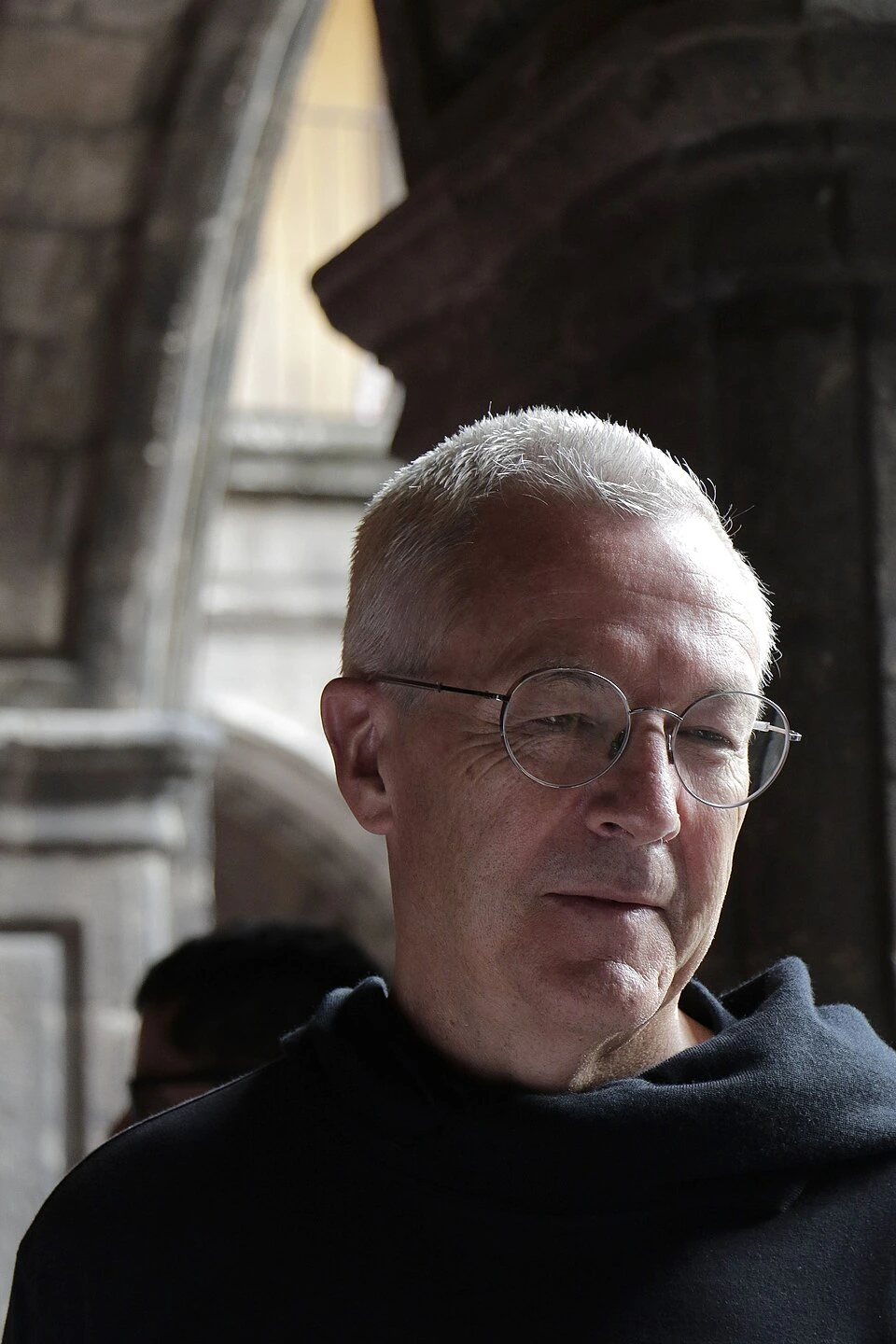
The Valerio Olgiati in this article is the Swiss architect born July 18, 1958, in Chur, Switzerland. He graduated from ETH Zurich in 1986 and is best known for projects including the Oberstufenschulhaus Paspels (1998) and the Yellow House renovation in Flims (1999). He runs an architecture studio based in Flims, Switzerland, and holds an academic position at the Academy of Architecture of Mendrisio (Università della Svizzera italiana, USI). If you searched for a different person with the same name, this is not that profile, these identifiers (Swiss architect, born 1958, ETH Zurich graduate, Flims studio) are used throughout to keep the profile clean.
Why does identity clarity matter for net worth research? Because conflated profiles produce garbage estimates. A musician, a businessman, or a minor public figure sharing a name can distort figures wildly. Olgiati is not a household celebrity name, which means low-quality net worth aggregator sites are especially prone to copying each other's unverified numbers. Treating him as the architect, with the specific income profile that implies, is the only way to produce a number that means anything.
Career highlights and what actually generates income
Olgiati's wealth-generating activities fall into a few clear buckets. Understanding each one is how you triangulate a realistic net worth range rather than pulling a figure from thin air.
Architectural commissions and studio economics
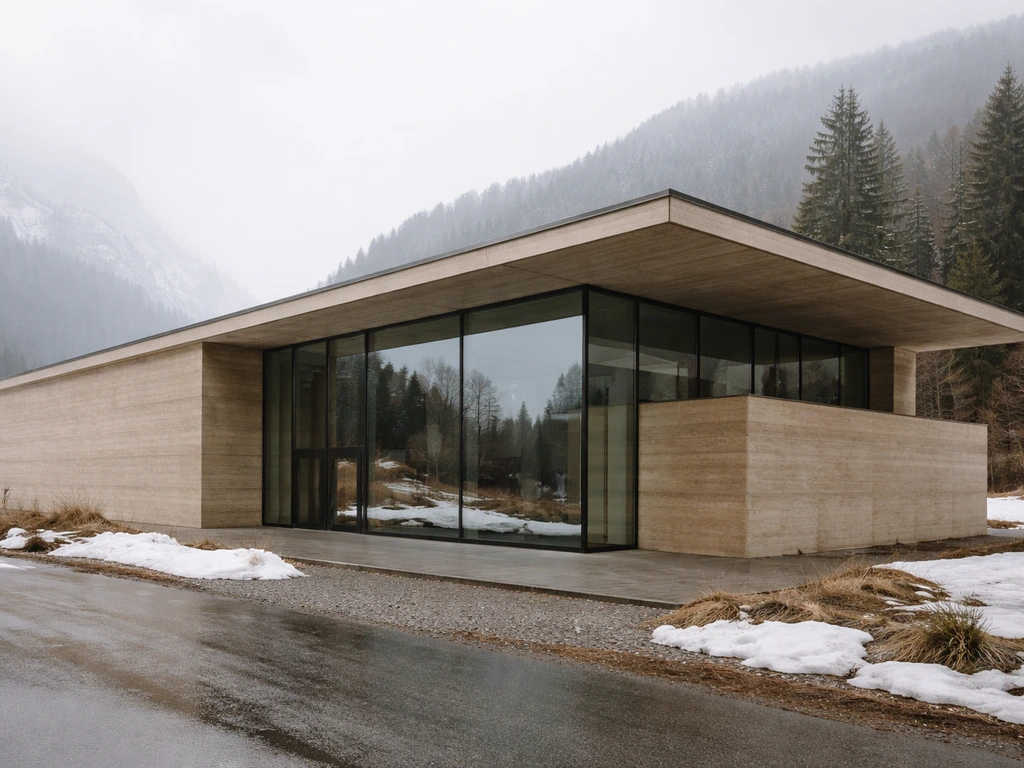
Olgiati's studio in Flims operates as a boutique practice. His documented projects include the [Zernez National Park Centre (2008), the Atelier Bardill (2007), the Yellow House in Flims (1999), and the Paspels school (1998). ](https://www. nextroom.
at/actor. php? id=3667) These are critically acclaimed, awards-adjacent projects, the kind that win competitions and attract institutional clients, but they are not high-volume commercial work. A boutique architect at his level in Europe typically charges fees in the range of 10 to 15 percent of total construction cost, with individual project fees on significant public or private builds ranging from roughly $200,000 to over $1 million per commission depending on scope.
His output is deliberately selective and conceptually driven, which means fewer projects but potentially higher per-project prestige fees. Over a four-decade career, cumulative commission income could reasonably total several million dollars, but ongoing annual revenue from the studio is modest by corporate architecture standards.
Teaching income across top institutions
Olgiati has held teaching positions or visiting professorships at ETH Zurich, the Architectural Association in London, Cornell University in New York, and Harvard GSD in Cambridge, plus his ongoing academic role at USI Mendrisio. Academic salaries at Swiss universities are notably competitive by European standards. A full professor at ETH Zurich earns between roughly CHF 180,000 and CHF 250,000 annually. Visiting and guest roles at institutions like Harvard GSD and Cornell typically pay honoraria or short-term stipends rather than full salaries, but they add meaningful supplemental income. Across decades of teaching, academic income likely represents a stable and significant portion of his total earnings.
Publications, lectures, and media
ETH Zurich's gta (Institute for the History and Theory of Architecture) has been involved in scholarly publication work around Olgiati, and a first scholarly monograph on his work is being published by Walther König Publishers, a respected European architecture press.
ETH Zurich’s Institute for the History and Theory of Architecture hosts an exhibition/academic page on Valerio Olgiati and points to ongoing scholarly publication activity around his work, including a first scholarly monograph being published by Walther König Publishers [ETH Zurich's gta has been involved in scholarly publication work around Olgiati](https://stalder. arch. ethz. ch/en/exhibitions/valerio-olgiati.
html). Architecture books of this type generate modest royalties, but they drive significant lecture income. High-profile architects at Olgiati's international recognition level can command lecture fees between $5,000 and $25,000 per engagement at universities, cultural institutions, and architecture festivals. Over a career with sustained international visibility, this is a real income stream, even if it is irregular.
The estimated net worth range, with honesty about the gaps
Putting those streams together: a career spanning roughly 35 to 40 years, boutique studio commissions, sustained academic employment at well-compensated Swiss and international institutions, lecture income, and publications. The $3 million to $10 million range reflects a realistic accumulation scenario for this profile. The lower bound assumes modest project volume, conservative savings, and typical Swiss living costs in a relatively small community like Flims. The upper bound accounts for the possibility of higher-value international commissions in recent years (Olgiati has completed projects internationally, including in the United States), potential real estate holdings in Switzerland, and decades of compounding on stable academic income.
Confidence level: low-to-moderate. There is no public disclosure of personal wealth, no corporate filing that reveals studio revenue, and no credible journalism that has reported a specific number. This estimate is triangulated from career and industry data, not from a direct source. Anyone citing a precise figure for Olgiati's net worth without sourcing it to a disclosure or well-documented financial event is speculating.
| Income Source | Estimated Annual Range | Confidence |
|---|---|---|
| Studio commissions (project fees) | $100,000 – $600,000 (variable) | Low – depends on active projects |
| Academic salary (USI/ETH type roles) | $120,000 – $220,000 USD equivalent | Moderate – Swiss academic pay is publicly benchmarked |
| Lectures and honoraria | $20,000 – $100,000 | Low – highly variable by year |
| Book royalties and publications | $2,000 – $15,000 | Low – modest for architecture niche |
| Total annual estimate (active years) | $240,000 – $935,000 | Low-to-moderate |
How net worth estimates are calculated for architects and public figures
For public figures who do not file public financial disclosures (like most non-U.S. politicians or non-publicly-traded business owners), net worth research relies on asset proxies and income triangulation. For architects specifically, the methodology looks like this: identify known projects and estimate fee revenue using industry-standard percentages of construction cost; benchmark against publicly known academic salary ranges in the relevant country; account for lecture, media, and publishing income based on the figure's visibility tier; then apply a savings and investment multiplier based on years of estimated peak earnings. Real estate holdings in Switzerland are not publicly searchable in a way that would allow precise valuation from outside the country, so that remains a meaningful gap.
This approach is necessarily imprecise. The gap between $3 million and $10 million is not a failure of research, it is an honest reflection of what is and is not knowable. For comparison, similarly prominent boutique architects in Europe and the U.S. with comparable institutional reputations but no large commercial practice (think of architects who win major awards, teach at elite schools, and publish significant theoretical work) tend to cluster in exactly this wealth tier. They are comfortable and professionally successful, but not wealthy in the way a partner at a large commercial firm or a starchitect running 300-person offices would be.
How Olgiati compares to similar figures
Putting Olgiati's profile in context helps calibrate the estimate. Other European architects with strong theoretical reputations, academic careers, and boutique practices typically fall in a similar range. Fashion industry figures like Vince Camuto or Giambattista Valli, who are sometimes researched alongside design-world names, operate in entirely different wealth tiers because fashion involves product licensing, retail, and scalable business models that architecture simply does not replicate. If you are also comparing fashion entrepreneurs, check how estimates such as Vince Camuto net worth differ from architecture-based profiles. For purely architecture-driven wealth, $3 million to $10 million is a credible and realistic range for someone of Olgiati's standing without a large commercial firm behind them.
Where to verify numbers and what to treat skeptically

Here is a practical checklist for anyone trying to verify or update this estimate independently:
- ETH Zurich and USI Mendrisio institutional pages: confirm his current academic status and role, which affects whether he is drawing a full professorial salary or a more limited appointment
- Swiss commercial register (Handelsregister): Olgiati's architecture firm may be registered as a legal entity, which would allow verification of the firm's existence and registered capital (though not revenue)
- Architecture press (Dezeen, Architectural Record, ArchDaily, Bauwelt): recent project announcements will indicate commission activity and geographic scope — more international commissions suggest higher fee potential
- Walther König Publishers and ETH gta publications: check for new monographs or edited volumes, which signal continued publishing income and lecture demand
- Pritzker Architecture Prize records and other major awards: Olgiati has not won the Pritzker as of this writing; a major prize win would substantially revise the estimate upward
- Academic salary benchmarks: Swiss federal data on professor salaries is published and can be used to anchor the teaching income component
What to treat skeptically: any site that gives a precise, round-number net worth for Olgiati (like '$5 million exactly' or '$8 million') without citing a source for that number is almost certainly extrapolating from general internet aggregation, not from actual research. If you are specifically looking for Valerio Battista net worth figures, treat any precise number you see online as unreliable unless it is tied to a clear disclosure or well-documented event. The same applies to sites that appear to auto-generate net worth profiles for thousands of figures using the same template, these often reflect each other's errors rather than any independent verification. If a site does not explain its methodology or cite its sources, discount the number heavily.
Next steps to update this estimate today
- Check for recent Olgiati project announcements on major architecture platforms (Dezeen, ArchDaily, Architectural Record) — new commissions, especially large international ones, are the single biggest upward revision trigger
- Search the Swiss Handelsregister (zefix.ch) for the registered name of his Flims-based firm to confirm it is active and check any registered capital figures
- Look up his current faculty page at USI Mendrisio and any ETH Zurich affiliation to determine whether he holds a full professorial appointment or a visiting role, then apply Swiss academic salary benchmarks accordingly
- Search Google Scholar or the ETH gta website for new publications or edited volumes in 2025 or 2026 — a major new monograph would increase lecture demand and honoraria income
- Check whether Olgiati has been shortlisted for or won any major architecture prizes (Pritzker, RIBA Gold Medal, Swiss Architecture Prize) in 2025 or 2026, as prize wins at this level carry both honorarium value and a significant multiplier on lecture fees
- Cross-reference any net worth figure you find on aggregator sites against at least one of the above primary sources before accepting it — if no primary source supports the number, treat it as a placeholder, not a fact
The bottom line: Valerio Olgiati is a serious, internationally respected architect with a career that supports a credible net worth estimate in the $3 million to $10 million range as of mid-2026. The uncertainty is honest and unavoidable given the absence of public financial disclosure. The most useful thing you can do with this estimate is use it as a calibrated starting point, then update it with the specific source checks above rather than treating any single number as settled.
FAQ
How can I tell if a net worth number I see for valerio olgiati net worth is just guesswork?
Look for a disclosed event or document, such as a publicly reported asset sale, bankruptcy, inheritance reporting, sworn testimony, or a reputable profile that explains exactly how the figure was computed. If the site provides a single precise value with no methodology, it is typically extrapolating from generic templates and should be treated as unreliable.
What’s the biggest factor that could push valerio olgiati net worth above $10 million?
A major high-value private commission or ownership stake that is not visible in the public project record. Since boutique firms often hold limited partners or personal holding companies for certain contracts, an untracked equity interest or large real estate holding could significantly raise the true figure.
What’s the biggest factor that could keep valerio olgiati net worth below $3 million?
Low lifetime savings rate or reduced project fee income in later years. If the studio’s retained earnings were reinvested heavily into staff, research, or sustained under-occupancy, accumulated personal wealth may not compound as much as the typical “peak earnings then invest” assumption.
Do lecture fees and academic roles reliably matter for net worth in the way project fees do?
They matter, but usually as supplemental income rather than the primary wealth driver for architects. For someone with Olgiati’s profile, lectures and publications typically contribute irregular cash flow, so net worth depends on how consistently those engagements occurred over decades and how much was saved or invested.
How should I adjust the estimate if I find a list of projects but missing dates or construction values?
Treat it as a fee-revenue ceiling estimate, not a final number. Fee revenue is closely tied to construction cost and timeline, so if construction budgets are unknown or dates are inconsistent, it is better to use broader ranges (like low vs high fee percentages) than to force a single assumption.
What mistakes happen when people use the wrong Valerio Olgiati identity?
The common issue is conflating a Swiss architect with someone else who shares the same name, leading to wildly incorrect comparisons and “net worth” figures. Verify identity using multiple anchors together (birth year, education, location, profession, and studio base) before trusting any number.
Is Switzerland a reason net worth is hard to verify for valerio olgiati net worth?
Yes. Swiss personal wealth and private company financials are generally not as publicly searchable as in some jurisdictions, and real estate valuation can be constrained by access limits. This often leaves net worth research dependent on income triangulation and observable career milestones rather than direct asset records.
Can I compute a more personal range myself using the article’s approach?
Yes, but you’ll need to be explicit about assumptions. Create a simple model: estimate annual studio fee income from known commissions, add an academic salary baseline, add an average lecture/publishing supplement, then apply a savings and investment multiplier over working years. The result should be expressed as a range, not a point estimate.
Why do some sites give round numbers like “$5 million” for valerio olgiati net worth?
Because many aggregators generate figures from a template and a rough tiering logic, not from verified calculations. Round-number outputs are a red flag, especially when there is no disclosed source, no explained method, and no matching evidence from public records.
If I want the net worth update in 2026 to 2027, what signals should I watch?
Watch for major newly completed international commissions, announcements of large competition wins with significant budgets, and any public reporting of property transactions. Also track whether his studio scale changes (staffing, office expansion, new partnerships), since that can correlate with fee revenue and retained earnings.
Could real estate holdings in Switzerland meaningfully change valerio olgiati net worth even if projects look modest?
Yes. An architect can appear boutique in public project logs while still holding valuable property personally or through entities. Because valuations and ownership details are not easily accessible, real estate is one of the largest unknown variables in these estimates.